
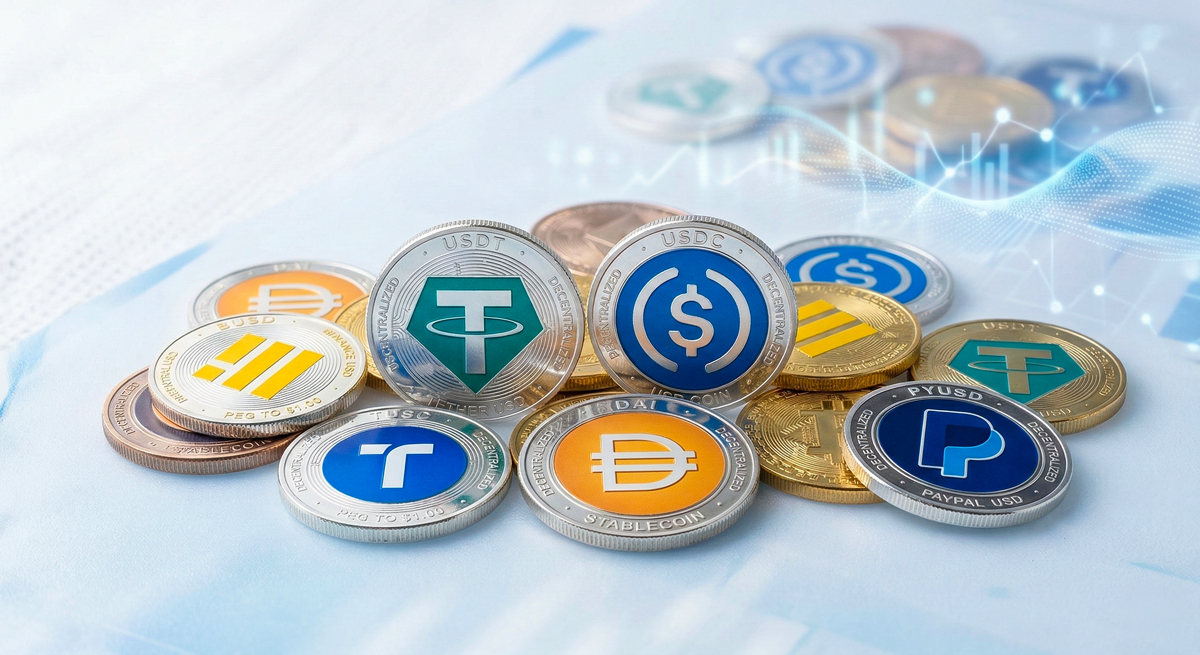
Global finance is entering a new phase of competition centered on the infrastructure that moves money. While cryptocurrencies first captured attention as speculative assets, stablecoins have increasingly emerged as one of the most practical and disruptive innovations in the digital asset ecosystem. Pegged to fiat currencies and designed for price stability, stablecoins are rapidly evolving into a backbone for digital payments, cross-border transfers, and financial settlement systems.
For governments, banks, fintech companies, and blockchain networks alike, the race is no longer simply about digital currencies. It is about who will control the next generation of global payments infrastructure.
Why Stablecoins Are Gaining Momentum
Stablecoins bridge the gap between traditional finance and blockchain-based networks. Unlike volatile cryptocurrencies, their value is typically tied to established fiat currencies such as the U.S. dollar or euro. This stability allows them to function as reliable mediums of exchange within digital financial systems.
Their appeal is rooted in three key advantages:
- Speed — Transactions settle in seconds rather than days.
- Cost efficiency — Fees are often a fraction of traditional banking transfers.
- Global accessibility — Anyone with internet access can participate without relying on local banking infrastructure.
These attributes make stablecoins particularly attractive for cross-border payments, where traditional systems remain slow and expensive.
The Cross-Border Payments Opportunity
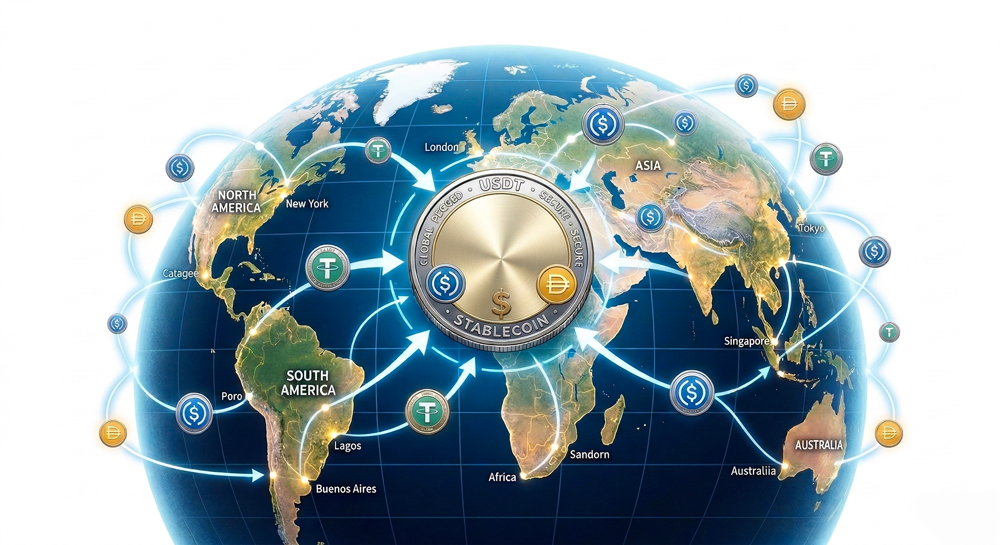
Global remittances and international settlements represent one of the largest opportunities for stablecoins. Traditional correspondent banking networks can take multiple days to process transactions and often involve significant intermediary fees.
Stablecoin-based payments offer a streamlined alternative:
- Near-instant settlement across borders
- Lower operational costs
- Reduced reliance on multiple banking intermediaries
- 24/7 transaction capability
Financial institutions and payment providers are increasingly experimenting with stablecoins as a way to modernize cross-border transfers, a market that moves trillions of dollars annually.
Big Tech, Banks, and Blockchain Networks Enter the Arena
The strategic importance of payment infrastructure has attracted a diverse group of competitors. Blockchain-native firms continue to build large-scale stablecoin ecosystems, particularly those backed by U.S. dollar reserves. At the same time, global payment networks and financial institutions are exploring tokenized deposits and bank-issued digital currencies designed to replicate the efficiency of stablecoins within regulated frameworks.
Major technology companies have also shown interest in digital payment rails that operate outside traditional banking hours and geographical limitations. Their global reach and user bases make them potential catalysts for rapid adoption. As a result, the payments landscape is increasingly defined by overlapping experiments in stablecoins, tokenized bank deposits, and central bank digital currencies.
Regulatory Frameworks Begin to Take Shape
The rapid growth of stablecoins has prompted regulators worldwide to develop oversight frameworks aimed at balancing innovation with financial stability.
Policymakers are focusing on several key areas:
- Reserve transparency and auditing requirements
- Consumer protection and redemption guarantees
- Anti-money laundering compliance
- Systemic risk monitoring
Regions such as the European Union, the United States, the United Kingdom, and financial hubs in the Middle East and Asia are all advancing regulatory approaches that could shape how stablecoins integrate into the formal financial system.
Clear regulatory frameworks may ultimately accelerate institutional adoption by providing the legal certainty required for large-scale financial participation.
Strategic Implications for Global Finance
The rise of stablecoins represents more than a technological shift. It reflects a broader transformation in how money moves around the world.
Control over payments infrastructure has historically been a major source of economic influence. Today, stablecoins introduce a new competitive dynamic where private digital assets, fintech platforms, and government-backed digital currencies are all vying for relevance.
If stablecoins continue gaining traction in international payments, they could:
- Reduce reliance on legacy correspondent banking systems
- Increase the efficiency of global commerce
- Expand financial inclusion in underbanked regions
- Accelerate the digitization of financial markets
At the same time, they may also intensify geopolitical competition over currency influence and financial network dominance.
The Infrastructure Race Is Just Beginning
Stablecoins are rapidly moving from the fringes of the cryptocurrency market toward the center of global financial infrastructure discussions. As governments, banks, and technology firms compete to shape the future of digital payments, the systems built today could determine how money moves for decades to come. What began as a niche experiment in blockchain finance is now evolving into one of the most consequential races in modern economic infrastructure.
MarketMind Insight – Stablecoins are no longer just crypto instruments; they are emerging as strategic payment rails in the global financial system. The real competition is not simply about digital currencies, but about who builds and controls the infrastructure that will power the next generation of global money movement.