

Institutional capital is no longer testing crypto—it is positioning around it. What began as cautious exposure through futures and custody pilots has evolved into structured allocation strategies, driven by regulated products, macro hedging needs, and a clearer regulatory framework in major markets. The shift is not about speculation; it is about portfolio construction. Increasingly, investment committees are treating digital assets as a permanent allocation sleeve rather than a tactical trade. This evolution is aligning crypto more closely with traditional asset allocation frameworks used across equities, fixed income, and alternatives.
The ETF Effect
The approval and rapid growth of spot Bitcoin ETFs fundamentally changed institutional access. These vehicles removed key barriers—custody risk, compliance complexity, and operational friction—allowing pension funds, asset managers, and family offices to allocate through familiar channels. Just as importantly, they introduced daily liquidity and transparent pricing, which are critical for large-scale capital deployment. The result has been a measurable acceleration in inflows from institutions that previously remained on the sidelines.
What this signals:
- Bitcoin is being treated as a macro asset, not a niche trade
- Allocation decisions are increasingly benchmark-driven
- Liquidity and compliance now outweigh early-adopter advantages
Bitcoin as Digital Gold, Ethereum as Infrastructure
Institutional portfolios are consolidating around two primary crypto exposures. This concentration reflects a preference for assets with clear narratives, deep liquidity, and established market infrastructure. Rather than spreading capital across dozens of tokens, institutions are prioritizing conviction over diversification within the crypto segment.
Bitcoin (BTC)
Positioned as a store of value and macro hedge, particularly in environments defined by:
- Persistent inflation uncertainty
- Sovereign debt concerns
- Currency debasement narratives
Ethereum (ETH)
Ethereum is viewed less as a currency and more as a technology platform:
- Exposure to tokenization trends
- Smart contract infrastructure
- Institutional experimentation with blockchain-based finance
Allocations remain relatively small—typically in the low single-digit percentage range—but the strategic intent is long-term. Over time, these positions are expected to scale alongside improvements in market depth and regulatory clarity.
The Rise of Yield and Structured Crypto Products
Beyond directional exposure, institutions are increasingly focused on yield generation within crypto markets. This shift mirrors traditional fixed-income strategies, where consistent income streams are prioritized alongside capital appreciation. The difference is that crypto-native markets introduce new forms of yield tied to blockchain activity and liquidity provisioning.
The goal is not aggressive yield chasing, but diversification of income streams in a low-to-moderate rate environment. Institutions are approaching these opportunities cautiously, favoring transparent and regulated structures over opaque high-yield offerings.
Tokenization: The Next Allocation Frontier
One of the most significant shifts is the move toward real-world asset (RWA) tokenization. This trend is being driven by the promise of increased efficiency, faster settlement, and fractional ownership across traditionally illiquid markets. Institutions are no longer viewing tokenization as experimental—they are piloting real use cases.
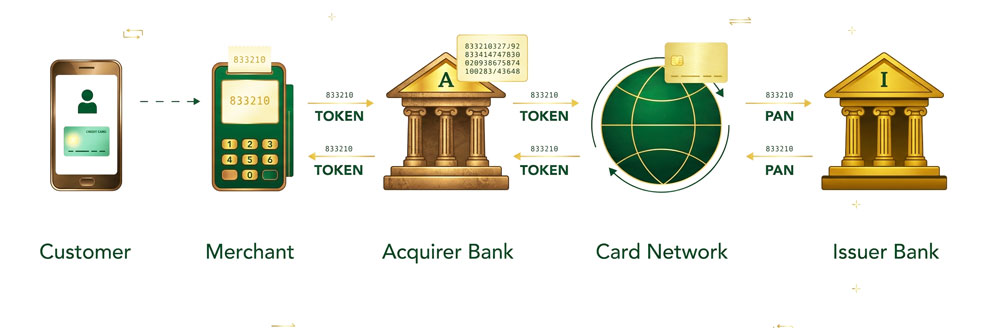
Institutions are exploring blockchain rails for:
- Government bonds
- Private credit
- Real estate exposure
This trend reflects a broader thesis: blockchain is not just an asset class—it is becoming financial infrastructure. Allocation strategies are increasingly split between crypto assets and blockchain-enabled assets, signaling a deeper integration into the global financial system.
Regional Capital Flows and Strategic Divergence
Institutional behavior varies by region. Regulatory clarity, market maturity, and government stance toward digital assets are shaping how capital is deployed. This creates a multi-speed adoption curve rather than a single global trajectory.
- United States: ETF-driven flows dominate, with large asset managers leading adoption
- Europe: More diversified exposure, including ETPs and structured products
- Middle East: Sovereign and strategic investment accelerating, often tied to broader digital asset initiatives
- Asia: Strong focus on infrastructure, trading hubs, and regulatory-led innovation
This fragmentation suggests that global allocation trends will not be uniform—but directionally aligned. Over time, cross-border capital flows may begin to converge as regulatory frameworks become more standardized.
Risk Frameworks Are Maturing
Institutions are no longer asking if crypto belongs in portfolios, but how much and under what conditions. Risk management is evolving alongside allocation, with firms building internal capabilities rather than relying solely on external providers. This maturation is critical for sustained institutional participation.
Volatility remains a defining feature, but it is increasingly treated as a managed variable rather than a prohibitive risk. As frameworks improve, the perceived risk-adjusted return profile of crypto continues to strengthen.
What Smart Money Is Actually Doing
Across hedge funds, pension funds, and asset managers, a consistent pattern is emerging. Institutions are favoring simplicity, scale, and clarity over complexity and speculation. The focus is on building resilient exposure rather than chasing short-term performance.
- Core allocation to Bitcoin via ETFs
- Selective exposure to Ethereum and infrastructure plays
- Limited but growing interest in tokenized real-world assets
- Avoidance of high-risk altcoin speculation
The emphasis is clear: liquidity, scale, and long-term viability. This disciplined approach is helping reshape crypto’s reputation from speculative to strategic.
Structural Shift, Not a Cycle

Institutional crypto allocation is no longer cyclical—it is structural. The presence of regulated products, clearer policy direction, and integration into traditional finance systems signals permanence. What was once considered an alternative edge case is now being embedded into mainstream investment thinking.
What remains dynamic is how capital is deployed. The next phase will likely be defined by:
- Expansion of tokenized financial markets
- Integration with traditional asset classes
- Greater competition among institutional crypto products
MarketMind Insight
Institutional capital is not chasing crypto’s upside—it is engineering exposure to its role in the future financial system. The real story is not how much money is entering the market, but how deliberately it is being positioned.