
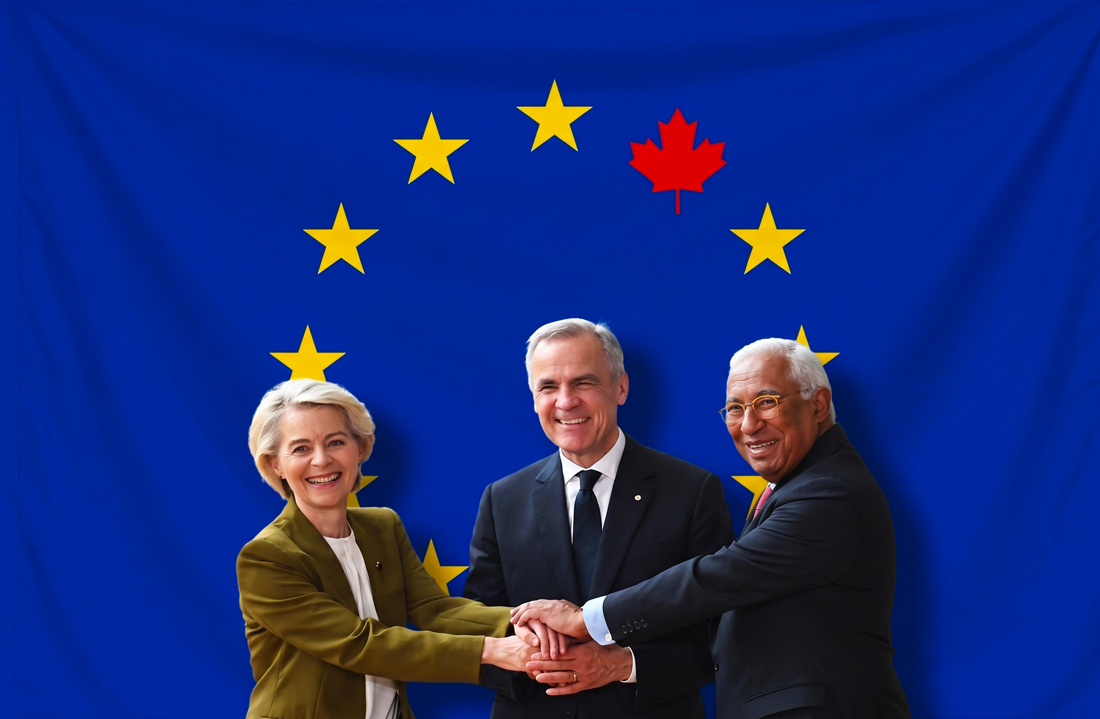
Canada and the European Union are considering an economic and security partnership that could extend well beyond their existing free-trade relationship. Canadian Prime Minister Mark Carney has called for a “unique alliance” with Europe, while European Commission President Ursula von der Leyen has raised the possibility of Canada becoming the EU’s first associate member.
The language is ambitious, but the structure remains undefined. Canada is not seeking full EU membership, and there is currently no established associate-membership framework that could simply be activated. Any deeper arrangement would require extensive negotiations and political support from EU member states. For investors, the immediate significance therefore lies less in the proposed label and more in the sectors being targeted: defence, critical minerals, energy, technology, digital trade and Arctic infrastructure.
Moving Beyond CETA
The new discussions are being built on the Comprehensive Economic and Trade Agreement, or CETA, which has been provisionally applied since 2017. CETA removed tariffs from approximately 98% of products traded between Canada and the EU and created broader access to procurement, services and investment opportunities.
The agreement has supported substantial growth in bilateral commerce. Canada–EU merchandise trade reached approximately €76 billion, or more than C$123 billion, in 2024—an increase of more than 60% compared with pre-CETA levels. When services are included, the economic relationship becomes considerably larger.
Yet CETA remains unfinished business. Ten EU member states have not completed national ratification, meaning portions of the agreement—most notably its investment-protection system—have yet to enter fully into force. That incomplete ratification is an important reminder that political enthusiasm at the European level does not automatically translate into unanimous national support.
A deeper alliance could improve market access without replacing CETA. The most realistic outcome would be a collection of sector-specific arrangements layered onto the existing agreement rather than Canadian participation in the EU single market on the same terms as an EU member.
Canada’s Diversification Strategy

Canada’s interest is driven partly by the enormous concentration of its trade with the United States. Geography, integrated supply chains and decades of continental investment mean the United States will remain Canada’s dominant economic partner. Europe cannot replace that relationship, nor could new trade routes be built overnight.
The strategic objective is diversification at the margin. Even a modest shift in Canadian exports, investment and procurement toward Europe could reduce exposure to American tariffs, policy changes and political volatility.
Ottawa wants to double Canada’s non-US trade over the next decade. Achieving that goal would require more than diplomatic agreements. Canada would need additional port capacity, faster project approvals, new energy and transportation infrastructure, and companies capable of meeting European regulatory and environmental standards.
Investors should consequently watch the enabling infrastructure as closely as the exporters themselves. Railways, ports, engineering firms, electricity networks, data centres and logistics providers may benefit if the alliance produces meaningful increases in transatlantic trade.
Defence Becomes an Economic Opportunity
Defence cooperation is already one of the partnership’s most developed areas. Canada and the EU signed a Security and Defence Partnership in 2025, followed by an agreement governing Canadian participation in the EU’s Security Action for Europe, or SAFE, instrument.
SAFE is a €150 billion financing program intended to support joint European defence procurement. Canadian participation may give eligible Canadian businesses greater access to European procurement opportunities while encouraging collaboration with European manufacturers.
That creates potential openings for Canadian aerospace, surveillance, cybersecurity, communications and defence-technology companies. European contractors could also gain new opportunities to invest in Canadian production or form joint ventures with domestic suppliers.
However, eligibility rules will matter. Investors should examine local-content requirements, intellectual-property provisions and whether Canadian companies can participate directly or must work through European-led procurement groups. In defence, the headline budget can be enormous while the investable opportunity remains highly dependent on the fine print.
Critical Minerals Move to the Centre
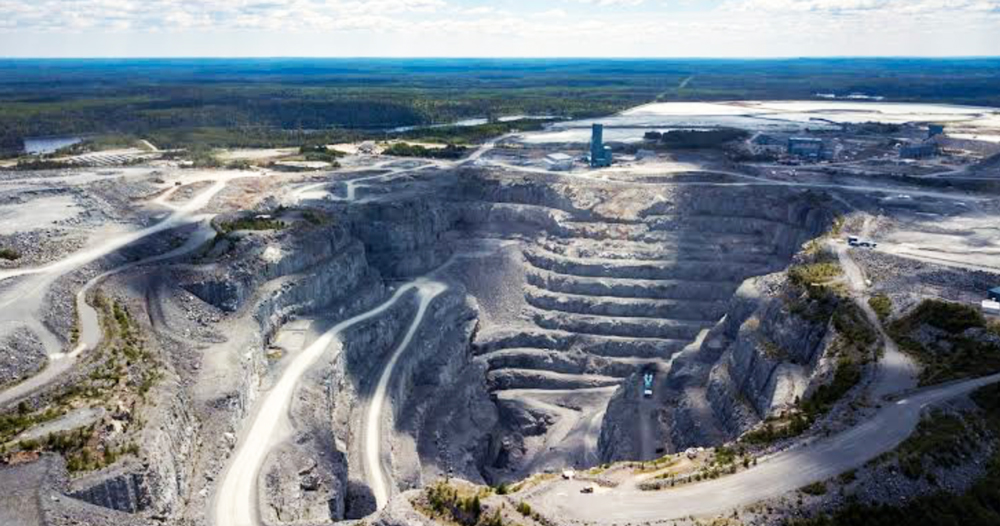
Critical minerals are likely to become one of the alliance’s most important economic pillars. Europe needs more secure supplies of lithium, nickel, cobalt, graphite, copper and rare earth elements for electric vehicles, renewable-energy systems, advanced manufacturing and defence equipment. Canada possesses significant resources and is viewed as a comparatively stable source of supply.
The relationship is already moving from general cooperation toward identifiable projects. The EU has recognized several Canadian projects under its Critical Raw Materials Act, reflecting Europe’s interest in developing supply chains outside highly concentrated global markets.
The largest investment opportunities may not be limited to mining companies. Europe wants diversified value chains rather than another system in which raw material is extracted in one country and processed almost entirely elsewhere. That could direct capital toward Canadian refining, mineral processing, battery materials and recycling facilities.
Projects must still overcome lengthy permitting processes, high construction costs, Indigenous consultation requirements and commodity-price volatility. Government recognition may improve financing prospects, but it does not automatically make a project commercially viable.
Energy and Arctic Infrastructure
Canada and Europe have complementary energy priorities. Europe is seeking reliable suppliers and greater energy security, while Canada needs additional routes to international markets. Cooperation could cover uranium, nuclear technology, hydrogen, liquefied natural gas, renewable power and the minerals required for electrification.
The Arctic adds another layer. Both sides have expressed interest in joint Arctic initiatives involving security, communications, transportation, research and infrastructure. Climate change is increasing the region’s strategic importance, but Arctic development remains exceptionally expensive and environmentally sensitive.
Investors should distinguish between long-term strategic ambition and projects with financing, approvals and customers. Announcements involving export corridors, ports or energy facilities can take years to become investable assets. The strongest signals will be binding purchase agreements, government-backed financing and final investment decisions—not summit language alone.
A Digital Trade Agreement Could Deliver Earlier Results
Canada and the EU launched negotiations for a Digital Trade Agreement in March 2026. This could become one of the first commercially meaningful components of the broader partnership because it builds on an established trading relationship and does not require the physical infrastructure associated with energy or mineral exports.
Negotiations may address electronic contracts, consumer protection, cybersecurity, cross-border data flows and cooperation on emerging technologies. A successful agreement could reduce regulatory uncertainty for cloud providers, financial-technology companies, software developers and professional-service firms operating on both sides of the Atlantic.
The difficult issue will be regulatory alignment. The EU applies extensive rules to privacy, artificial intelligence and large digital platforms. Canadian companies seeking greater European access may need to absorb higher compliance costs, while policymakers will need to decide how closely Canadian standards should align with European rules.
Greater certainty would benefit established companies capable of managing the requirements. Smaller technology businesses could gain access to a larger market but may face proportionally heavier compliance expenses.
What Could Hold the Alliance Back
The proposal faces political and practical limits. Some EU governments remain cautious about granting Canada privileged access, particularly while CETA has not achieved full ratification. Agriculture, dairy access, procurement rules and regulatory recognition have all produced disagreements in the existing relationship.
Canada also faces domestic barriers. Provincial authority over areas such as procurement, professional regulation and natural-resource development can complicate national commitments. Telecommunications ownership restrictions and supply-managed agriculture could become obstacles if Europe demands broader reciprocal access.
Most importantly, Canada’s economy is structurally tied to the United States. Supply chains in automobiles, energy, agriculture and manufacturing were built around north-south integration. Redirecting trade across the Atlantic requires new infrastructure, commercial relationships and regulatory approvals. It is a multi-year strategy, not an immediate economic escape hatch.
What Investors Should Watch
The next Canada–EU summit will be important because it may reveal whether the alliance is becoming a negotiating framework or remains primarily a political vision. Investors should look for defined timelines, working groups, funding commitments and sector-specific agreements.
CETA ratification remains another key indicator. Progress among the remaining EU countries would demonstrate broader political support and provide greater certainty around investment protections.
The Digital Trade Agreement may offer the clearest near-term test. An agreement covering data, cybersecurity and electronic commerce would show that both sides can convert strategic alignment into enforceable commercial rules.
In the physical economy, investors should monitor European financing for Canadian mineral processing, defence manufacturing and energy infrastructure. Capital commitments and long-term procurement contracts would carry considerably more weight than memoranda of understanding.
Currency movements also deserve attention. Greater trade and investment flows could modestly broaden demand for the Canadian dollar, but the currency will remain much more sensitive to US economic conditions, commodity prices and Bank of Canada policy.
MarketMind Insight
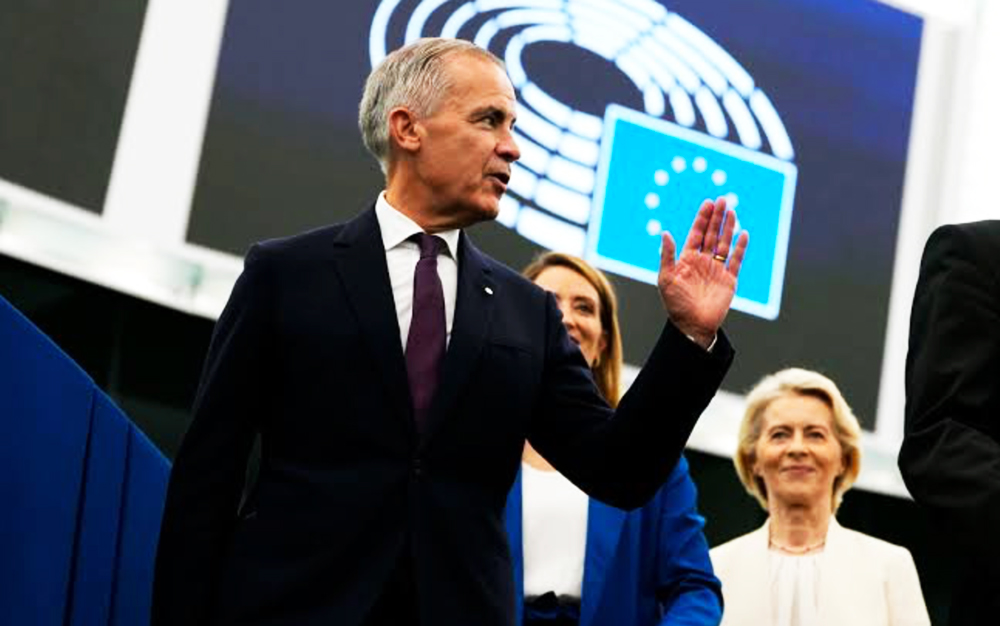
A deeper Canada–EU alliance would not detach Canada from the United States or give Canadian businesses automatic entry into Europe’s single market. Its value would come from building additional economic options in a world where access to energy, minerals, technology and defence capacity increasingly shapes trade policy.
The strongest opportunities are likely to emerge where European strategic demand meets Canadian resources and expertise: critical minerals, defence technology, energy, digital services and Arctic infrastructure. But the winners will not be determined by political language alone. Investors should focus on ratified agreements, procurement eligibility, committed financing and actual construction.
This alliance could become a major economic bridge across the Atlantic. For now, however, the bridge is still on the drawing board—and markets should value the contracts before celebrating the architecture.