

For investors questioning how much longer the artificial intelligence boom can continue, NVIDIA has delivered a remarkably confident answer. After reporting another record quarter, the chipmaker projected approximately 70% revenue growth for fiscal 2028, far above the roughly 44% growth Wall Street had expected before the announcement. Even more striking, NVIDIA says that forecast is being limited by supply rather than demand.
The message reaching markets is significant: the world’s dominant AI chip supplier sees little evidence that the global AI infrastructure cycle is approaching its peak. For NVIDIA, that means another potentially enormous year of growth. For the broader market, it strengthens the argument that AI capital spending could remain one of the most important forces driving technology stocks, semiconductor demand and global investment well into 2027 and 2028.
The Numbers Behind the Bullish Outlook
NVIDIA’s fiscal second-quarter 2027 results demonstrated just how rapidly the company continues to expand despite its enormous size. Revenue reached $96.2 billion, up 106% from a year earlier and 18% from the previous quarter.
Data Center revenue climbed to $89 billion, increasing 117% year over year as cloud providers, AI laboratories and other customers continued building computing infrastructure. Adjusted earnings reached $2.22 per share, while gross margin remained at 75%. The company is now forecasting approximately $108 billion in third-quarter revenue, plus or minus 2%, compared with Wall Street expectations of roughly $104 billion before the report.
That would push NVIDIA beyond $100 billion in quarterly revenue for the first time. But the biggest number for investors was not the next-quarter forecast. It was the outlook for fiscal 2028.
70% Growth Changes the Market Conversation
NVIDIA rarely provides guidance so far into the future, making its preliminary expectation for approximately 70% revenue growth in fiscal 2028 particularly important. Before the announcement, analysts had expected growth closer to the mid-40% range. The difference is substantial.
Markets have spent much of 2026 debating whether the extraordinary AI capital-spending cycle was beginning to mature. NVIDIA’s outlook suggests the company is seeing something very different from a slowdown. Management says customer demand is actually greater than what NVIDIA can currently supply. CEO Jensen Huang said the company has enough supply to support roughly 70% growth, while underlying demand could support considerably more. That changes the central question surrounding NVIDIA.
The problem may not be finding customers for its next generation of AI hardware. It may be producing enough hardware to satisfy them.
The AI Spending Boom Is Broadening
One of the strongest parts of NVIDIA’s outlook is where the demand is coming from. The first stage of the AI infrastructure boom was heavily concentrated among enormous cloud companies and a small group of leading AI developers. Those customers remain critical, but NVIDIA is increasingly seeing demand spread across a wider market.
AI laboratories are expanding rapidly. Specialized AI cloud providers are adding capacity. Governments are investing in sovereign AI infrastructure. Enterprises are moving AI from experimentation toward deployment. Robotics and physical AI are creating another potential source of computing demand. NVIDIA expects AI laboratories alone to represent roughly one-quarter of its overall business next year. That diversification could make the AI investment cycle more durable. The market is gradually moving from a story dominated by several hyperscalers toward a much larger ecosystem of companies and governments competing for AI computing capacity.
Rubin Extends the Hardware Cycle
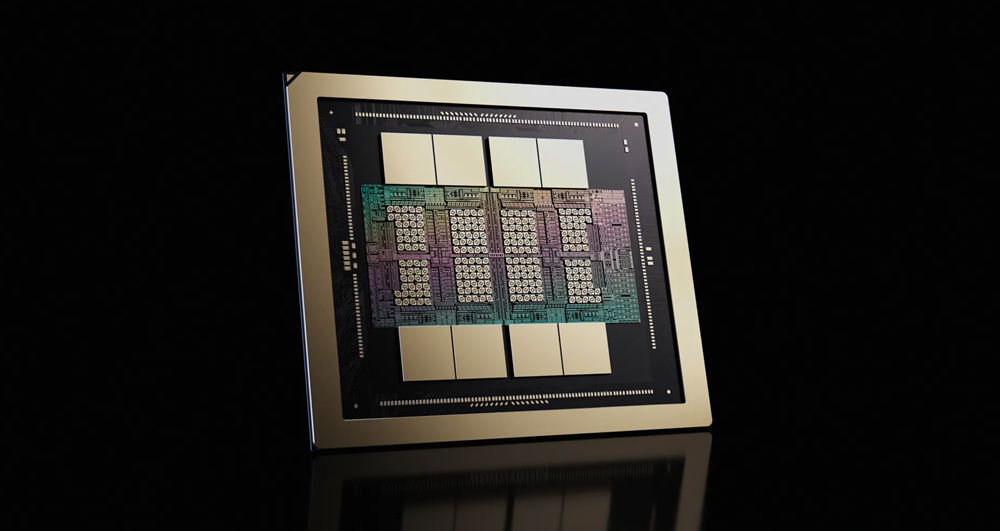
NVIDIA’s next-generation Vera Rubin platform is becoming central to the next stage of that growth. Rubin is now ramping into full production, with systems running at major infrastructure partners. The platform follows Blackwell and Blackwell Ultra, continuing NVIDIA’s aggressive strategy of introducing increasingly powerful AI computing architectures. For investors, successful product transitions are crucial.
One of the risks surrounding NVIDIA has always been that customers could eventually digest the enormous amount of hardware already purchased. Instead, new generations of AI models are requiring greater computing capacity while inference workloads are expanding alongside training. Agentic AI could push that demand even further. An AI assistant answering a question requires computing power. An AI agent independently researching information, analyzing data, interacting with software and completing a complex task can require substantially more computation.
As AI becomes more capable, the amount of computing behind each user could therefore increase rather than decline. That is exactly the environment NVIDIA is positioning Rubin to capture.
Amazon Shows How Large AI Infrastructure Is Becoming
The scale of AI deployments is also moving into territory rarely seen in previous semiconductor cycles. NVIDIA and Amazon Web Services plan to deploy an additional 2 million NVIDIA GPUs across AWS infrastructure during 2027 and 2028. These deployments will include Blackwell Ultra, Rubin and Rubin Ultra systems.
Deals involving millions of accelerators demonstrate how dramatically the economics of the semiconductor industry are changing. NVIDIA is no longer simply selling individual chips or servers. Its technology is becoming part of enormous data-centre projects that increasingly resemble telecommunications, energy and other forms of critical infrastructure. That distinction helps explain why NVIDIA believes extraordinary growth can continue even from today’s enormous revenue base.
Why the Bull Case Extends Beyond NVIDIA
NVIDIA’s forecast matters far beyond one stock. If its demand expectations prove accurate, the implications extend throughout the AI infrastructure supply chain. Memory manufacturers could benefit from rising demand for high-bandwidth memory. Semiconductor equipment companies could see continued investment in manufacturing capacity. Networking suppliers are becoming increasingly important as AI clusters grow. Power generation, cooling systems and electrical infrastructure are becoming critical components of the data-centre buildout.
AI investment is therefore becoming a broader capital-expenditure cycle rather than simply a semiconductor story. That has consequences for markets. The AI trade increasingly connects technology stocks with utilities, energy infrastructure, industrial equipment, construction and financing.
NVIDIA remains at the centre, but the economic footprint surrounding it continues to expand.
The Market Still Has Reasons to Be Cautious
A bullish NVIDIA forecast does not eliminate the risks surrounding the AI trade. The first is supply. NVIDIA says memory availability and other component constraints are limiting how quickly it can expand. Higher component costs are also expected to pressure profitability. Gross margins are projected at approximately 74% for the third quarter before potentially falling into the 71% to 72% range during the fourth quarter.
China remains another uncertainty. NVIDIA’s $108 billion third-quarter revenue forecast assumes no Data Center compute revenue from China, reflecting continuing uncertainty surrounding U.S. export restrictions and access to the Chinese market. Competition is also growing. Cloud providers are developing custom AI accelerators, while rival semiconductor companies continue investing heavily in alternative platforms. But the biggest risk may ultimately be financial rather than technological.
The global technology industry is committing extraordinary amounts of capital to AI infrastructure. Eventually those investments need to produce sufficient revenue and productivity gains to justify continued spending. If AI monetization disappoints, capital expenditure could slow. For now, NVIDIA is signaling precisely the opposite.
What Markets Should Watch Next
NVIDIA has provided investors with an unusually clear roadmap. The next several quarters will determine whether the company can deliver against it. The most important indicators will be the speed of the Rubin ramp, availability of memory and other components, gross-margin stabilization and continued capital spending by major cloud providers. Investors should also watch whether demand continues broadening beyond the largest technology companies.
If governments, enterprises, AI laboratories and specialized cloud providers become increasingly important customers, NVIDIA’s growth story becomes less dependent on the spending decisions of a handful of hyperscalers. That could significantly extend the AI investment cycle.
MarketMind Insight
NVIDIA’s latest forecast is bigger than another earnings beat. A company already generating $96.2 billion of quarterly revenue is telling markets that it expects revenue to grow approximately 70% in fiscal 2028 — and that supply constraints, rather than insufficient demand, are preventing an even stronger outlook. That is a powerful signal for the broader AI trade.
The immediate bullish argument is straightforward: AI infrastructure spending continues to expand, NVIDIA remains at the centre of that expansion, and the transition from Blackwell to Rubin gives the company another major product cycle. The longer-term question is more important. If AI moves from today’s infrastructure-building phase into widespread commercial deployment, demand for computing could continue growing alongside the technology itself. That would make the current boom less comparable to a traditional semiconductor cycle and more comparable to the construction of a new layer of global digital infrastructure.
NVIDIA’s forecast does not prove that outcome. But it provides some of the strongest evidence yet that, from inside the AI supply chain, the boom still looks much closer to expansion than exhaustion.