
Market Setup: Rates Staying Higher for Longer
The macro backdrop in 2026 is defined by a stubborn combination of resilient economic growth and inflation that has proven difficult to fully contain. The Federal Reserve has maintained a cautious stance, keeping policy rates elevated as it prioritizes inflation control over premature easing. Labor markets remain relatively tight, consumer spending has not materially collapsed, and energy price volatility continues to inject upside risks into inflation expectations.
As a result, rate-cut timelines have been repeatedly pushed back, reinforcing a “higher-for-longer” narrative that is now deeply embedded in market pricing. This environment is not just influencing valuations—it is actively reshaping leadership across U.S. equities. The most visible outcome is the growing divergence between the Nasdaq and the Dow, two indices now responding very differently to the same macro forces.
Understanding the Two Indices
At the core of this divergence is composition. The Nasdaq and the Dow are not simply different indices—they represent fundamentally different segments of the economy and investment styles.
- Nasdaq Composite
- Heavily weighted toward technology, AI, and high-growth sectors
- Dominated by mega-cap firms whose valuations depend on future earnings expansion
- Sensitive to liquidity conditions, rates, and investor risk appetite
- Dow Jones Industrial Average
- Concentrated portfolio of 30 blue-chip companies
- Broad exposure to industrials, financials, healthcare, and consumer sectors
- Emphasis on stable earnings, dividends, and established business models
In a low-rate environment, these differences often matter less. In a high-rate regime, they become the defining factor behind performance gaps.
Why High Rates Favor the Dow
Elevated interest rates fundamentally alter how markets value companies and allocate capital. When borrowing costs rise and liquidity tightens, investors shift their focus toward durability and near-term profitability rather than distant growth potential.
This shift plays directly into the strengths of the Dow:
- Industrials benefit from infrastructure spending cycles and pricing power in supply-constrained environments
- Financials expand margins as higher rates increase lending profitability
- Consumer and healthcare giants provide consistent earnings and defensive characteristics
- Dividend yields become more competitive relative to fixed-income alternatives
In practical terms, the Dow becomes a proxy for economic resilience. During periods of inflation concern, energy price spikes, or geopolitical uncertainty, capital tends to rotate into these sectors, providing the index with relative stability—and at times, upside.
Why the Nasdaq Faces Pressure
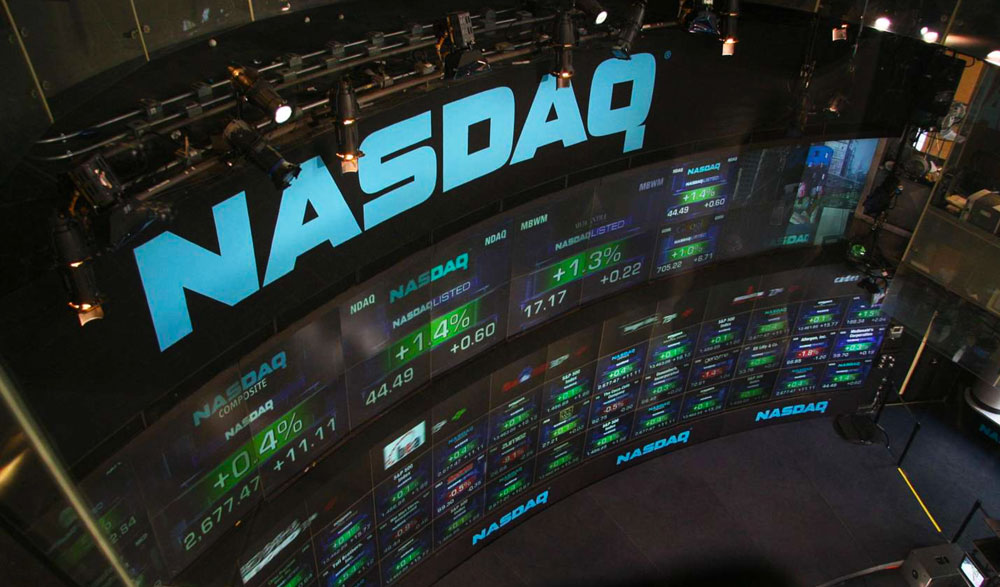
The Nasdaq’s structure makes it inherently more sensitive to the current macro environment. Growth-oriented companies rely heavily on future earnings expectations, which are discounted more aggressively when interest rates rise.
This creates multiple layers of pressure:
- Higher discount rates compress valuations even when revenues remain strong
- Capital-intensive innovation cycles—particularly in AI and semiconductors—require sustained investment
- Market expectations for continued high growth leave little room for disappointment
While the long-term narrative around AI, cloud computing, and digital infrastructure remains intact, short-term volatility has increased. Periodic pullbacks in semiconductor stocks and fluctuations in mega-cap tech reflect a market recalibrating expectations. Even strong earnings reports are now being judged against higher benchmarks, leading to sharper reactions in both directions.
Earnings vs Rates: The Tug of War
One of the defining features of 2026 markets is the ongoing tension between strong corporate earnings and restrictive monetary policy. The Nasdaq continues to benefit from powerful structural tailwinds:
- Expansion of AI infrastructure and enterprise adoption
- Continued growth in cloud services and data ecosystems
- Dominance of a handful of mega-cap companies driving index performance
However, these strengths are constantly being weighed against rate pressure. The result is a market dynamic where:
- Positive earnings drive rallies, but gains are often capped by macro concerns
- Negative surprises trigger outsized downside moves due to elevated valuations
By contrast, the Dow operates with a different balance. Its performance is less dependent on rapid earnings acceleration and more aligned with steady economic conditions, making it less sensitive to the same valuation compression forces.
Sector Rotation Is Driving the Divergence
The divergence between the Nasdaq and the Dow is ultimately a reflection of capital rotation rather than outright market weakness. Investors are not exiting equities—they are reallocating within them.
| Market Driver | Nasdaq Impact | Dow Impact |
|---|---|---|
| Higher rates | Negative (valuation compression) | Neutral to positive |
| Inflation persistence | Negative (margin pressure) | Positive (pricing power sectors) |
| AI growth narrative | Positive but volatile | Limited impact |
| Energy price strength | Negative (cost pressures) | Positive (energy exposure) |
| Defensive positioning | Outflows | Inflows |
This rotation has led to more frequent sessions where the indices move in opposite directions, reinforcing the idea that markets are being driven by sector-specific narratives rather than broad-based momentum.
Investor Positioning in 2026
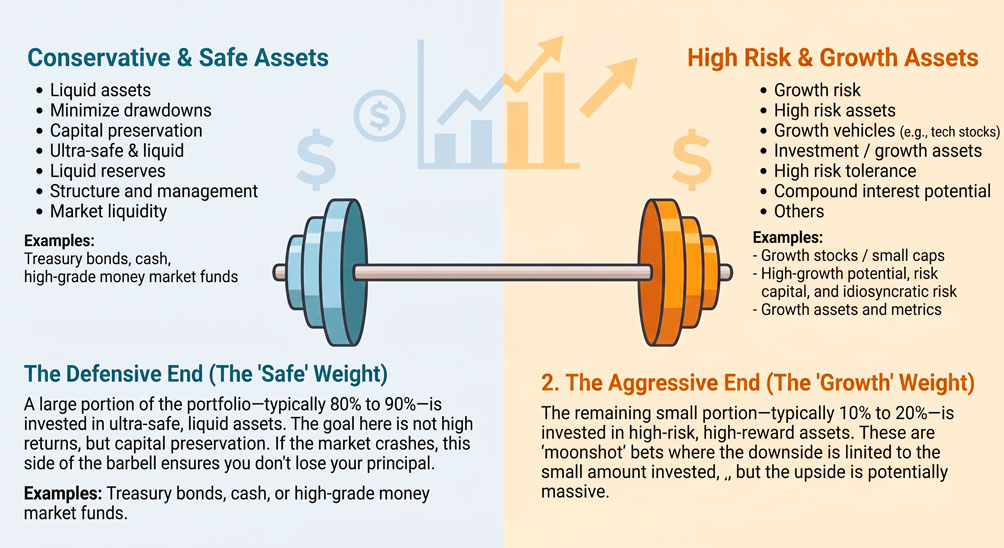
Institutional investors have adapted quickly to this environment, and their positioning is reinforcing the divergence.
- Barbell strategies dominate
- Exposure to mega-cap tech leaders for growth
- Allocation to industrials, energy, and financials for stability
- Selective risk-taking
- Reduced exposure to unprofitable or speculative growth companies
- Increased emphasis on balance sheets and cash flow
- Income and resilience
- Renewed interest in dividend-paying equities
- Greater allocation to sectors tied to real economic activity
This approach reflects a market that is no longer purely growth-driven but instead balancing innovation with durability.
What Could Reconnect the Two?
Despite the current divergence, the Nasdaq and Dow are not permanently decoupled. Convergence would likely require a shift in the macro narrative:
- A credible rate-cut cycle
- Would lower discount rates, boosting growth valuations and driving Nasdaq outperformance
- A meaningful economic slowdown
- Would weaken cyclical sectors, reducing the Dow’s relative advantage
- Stabilization in inflation and energy markets
- Would ease pressure on both indices and reduce the need for defensive positioning
Until one of these scenarios materializes, divergence is likely to remain a defining feature of market behavior.
Project Outlook
The widening gap between the Nasdaq and the Dow is not a short-term anomaly—it reflects a deeper transition in how markets operate under sustained higher interest rates.
- The Nasdaq remains a high-growth engine, powered by innovation but increasingly constrained by macro conditions
- The Dow has evolved into a stability anchor, benefiting from real-economy exposure and consistent earnings power
In 2026, market leadership is no longer unified. Instead, it is fragmented—split between those betting on the future and those positioning for the present.