
Exchange-Traded Funds (ETFs) have become a cornerstone of modern investing — combining the diversification of mutual funds with the flexibility of stock trading. For traders and long-term investors alike, ETFs offer access to entire markets, sectors, or asset classes, all in a single trade. Understanding how to trade them effectively can unlock opportunities across global markets.
Understanding ETFs
An ETF is a basket of securities that tracks an index, sector, commodity, or other asset. It trades on exchanges just like a stock, with prices fluctuating throughout the day. Popular examples include the SPDR S&P 500 ETF (SPY) and the Invesco QQQ Trust (QQQ), which mirror the S&P 500 and Nasdaq-100 respectively.
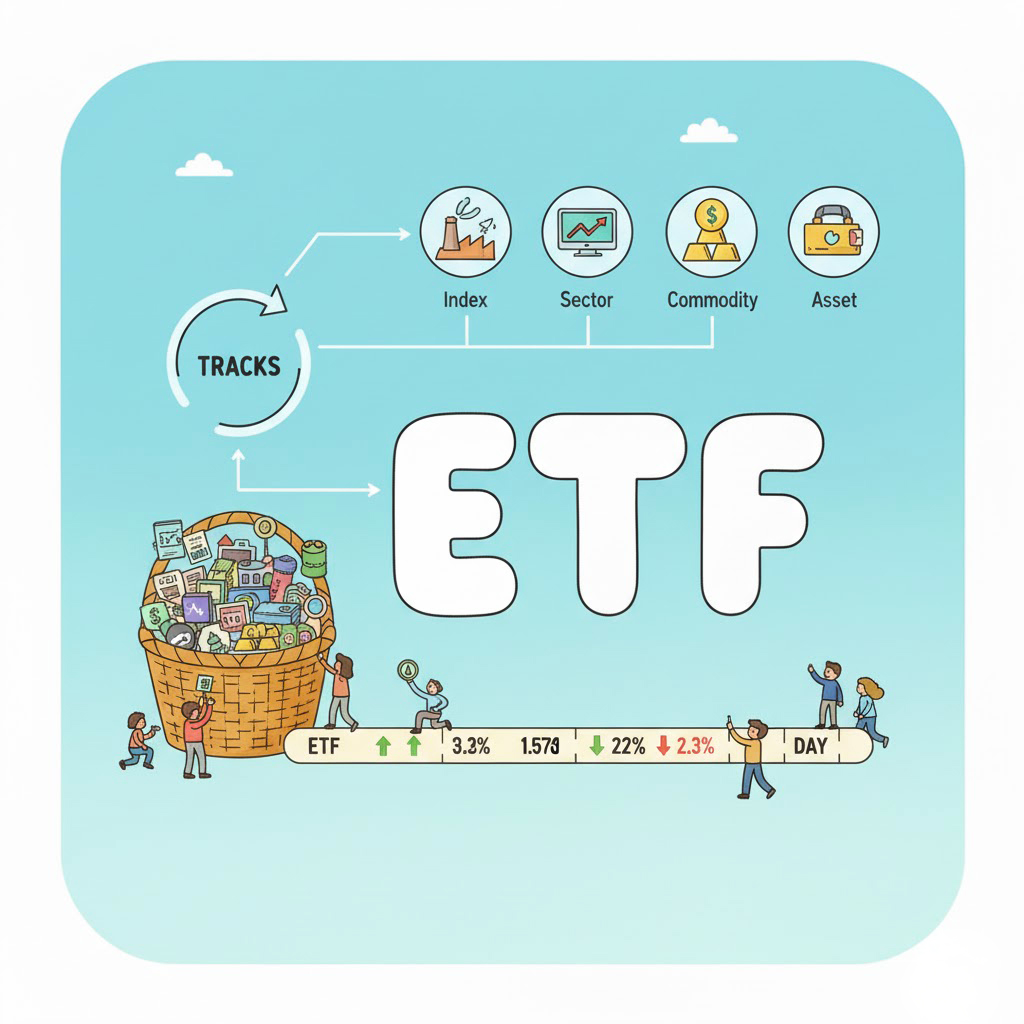
Key traits of ETFs:
- Diversification: One trade provides exposure to multiple assets.
- Liquidity: ETFs can be bought or sold anytime during market hours.
- Low Costs: Typically lower expense ratios than mutual funds.
- Transparency: Most ETFs disclose their holdings daily.
Why Traders Choose ETFs
ETFs cater to both passive and active strategies. Swing traders use them to speculate on sectors or trends, while long-term investors rely on them for portfolio stability. Their versatility allows for strategies like hedging, sector rotation, and global exposure without needing to pick individual stocks.
Advantages for traders include:
- Access to commodities, bonds, or emerging markets.
- Ease of shorting or using margin.
- Availability of leveraged and inverse ETFs for tactical plays.
ETF Trading Strategies
Like stocks, ETFs can be traded using technical or fundamental analysis. Effective ETF traders focus on liquidity, expense ratios, and tracking accuracy.
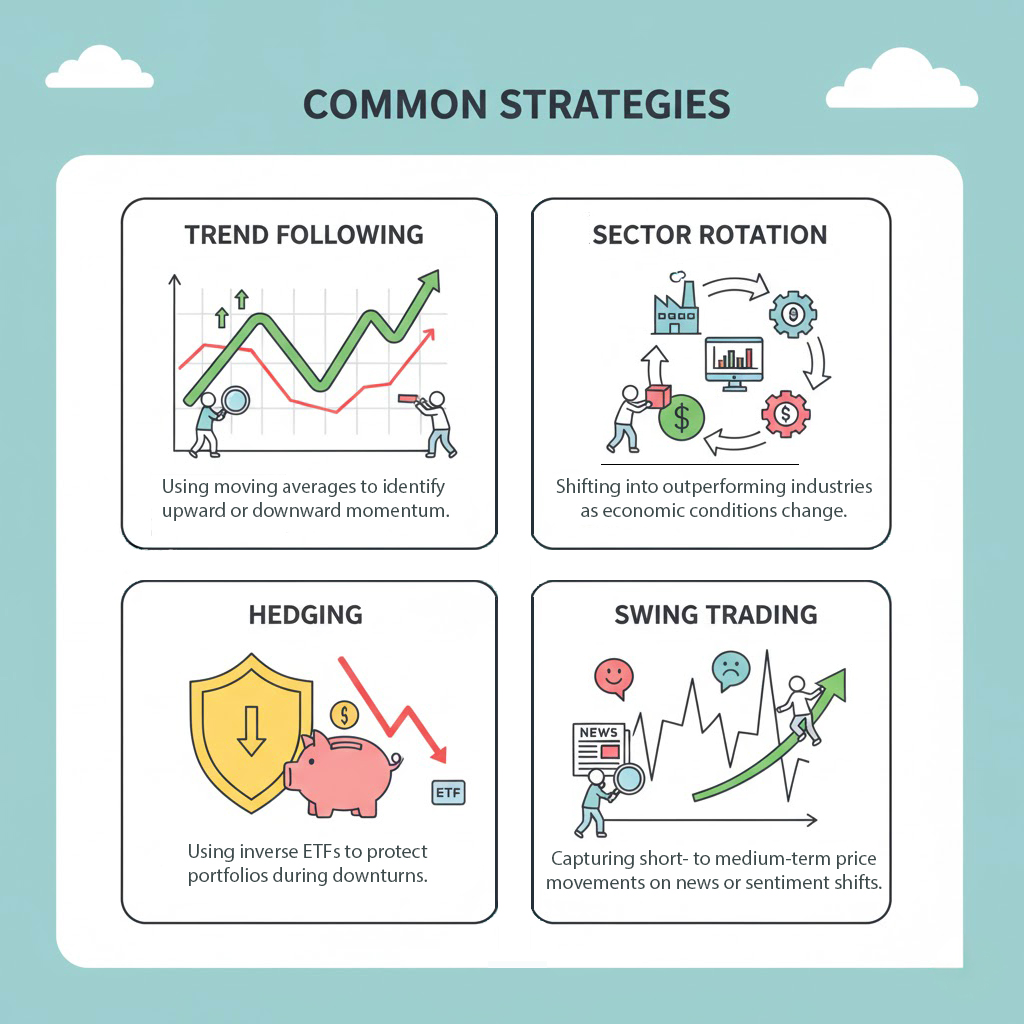
Common strategies include:
- Trend Following: Using moving averages to identify upward or downward momentum.
- Sector Rotation: Shifting into outperforming industries as economic conditions change.
- Hedging: Using inverse ETFs to protect portfolios during downturns.
- Swing Trading: Capturing short- to medium-term price movements on news or sentiment shifts.
Risks and Considerations
Although ETFs are designed for diversification, they aren’t risk-free. Market volatility, tracking errors, and liquidity issues can impact returns. Leveraged ETFs, in particular, amplify both gains and losses — making them suitable only for experienced traders.
Before trading, assess:
- Expense Ratio: The annual management cost.
- Tracking Difference: How closely the ETF mirrors its benchmark.
- Liquidity: Average daily volume and bid-ask spreads.
- Underlying Assets: What the ETF actually holds — equities, bonds, or derivatives.
Getting Started with ETF Trading
New traders should start by selecting ETFs that match their risk tolerance and strategy. Major brokerage platforms offer commission-free ETF trading, along with real-time data and research tools. Practice with virtual accounts before scaling positions, and always manage risk through diversification and stop-loss orders.
Pro tip: Monitor macroeconomic indicators and earnings seasons — ETFs reflecting indices or sectors often react strongly to broader market data.
MarketMind Insight – ETF trading blends the precision of stock strategies with the diversification of fund investing. Success depends on understanding the underlying assets, managing leverage carefully, and aligning each trade with a clear market thesis.