
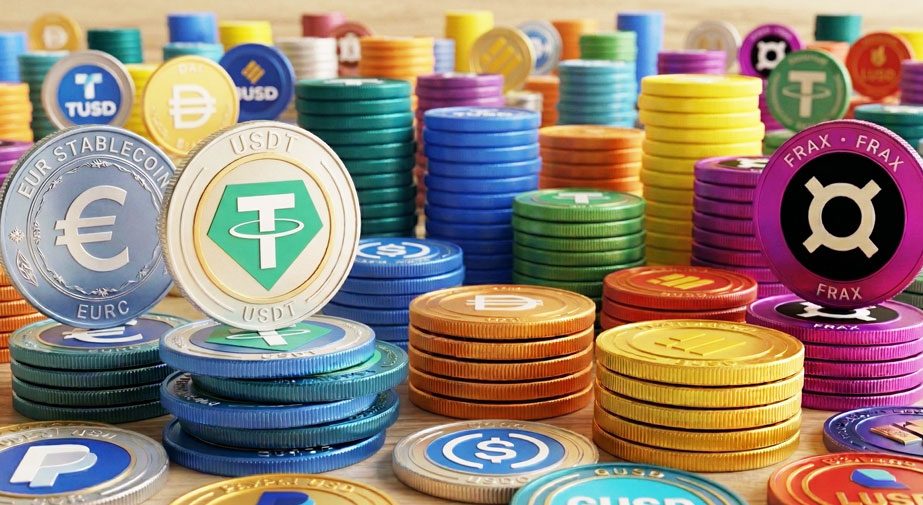
In periods of market stress, capital doesn’t disappear—it rotates, often with surprising speed. Over the past few years, stablecoins have emerged as a primary destination for that capital, acting as a digital refuge when volatility spikes across both crypto and traditional markets. As macro uncertainty—from shifting interest rate expectations to energy-driven inflation pressures—filters into risk assets, traders increasingly rely on stablecoins to preserve value while maintaining instant access to liquidity. Their role has evolved beyond convenience; they now function as a critical layer of market infrastructure, bridging risk-off positioning with rapid re-entry into opportunity.
The Flight to Stability
During volatility spikes—whether driven by central bank policy shifts, commodity shocks, or geopolitical tension—investors prioritize capital preservation without sacrificing flexibility. Stablecoins provide a unique solution: price stability relative to fiat currencies combined with the speed and accessibility of blockchain-based assets. This makes them particularly valuable in fast-moving markets, where exiting into traditional banking systems can introduce delays, fees, and operational friction.
Unlike fiat held in traditional banking systems, stablecoins allow:
- 24/7 liquidity across global markets
- Instant settlement for trading and transfers
- On-chain transparency (to varying degrees)
- Seamless re-entry into risk assets
This combination enables traders to move defensively without stepping outside the digital asset ecosystem.
Market Liquidity Backbone
Stablecoins are no longer just a defensive tool—they have become foundational to how crypto markets function on a day-to-day basis. A significant portion of global crypto trading volume is now denominated in stablecoin pairs, making them essential for price discovery, arbitrage, and market efficiency. In times of volatility, this role becomes even more pronounced, as capital rotates quickly into stablecoins rather than exiting the ecosystem entirely.
Today, they:
- Serve as primary trading pairs across major exchanges
- Act as collateral in DeFi lending and derivatives
- Provide cross-border settlement rails outside traditional systems
As a result, stablecoins help absorb shocks, stabilize liquidity conditions, and position markets for faster recoveries once sentiment shifts.
Yield and Capital Efficiency
In addition to stability, stablecoins offer a compelling value proposition through yield generation, particularly in environments where traditional fixed-income returns may lag or remain uncertain. As decentralized finance continues to mature, stablecoins have become central to a growing range of income-generating strategies that blend liquidity with relatively lower volatility exposure.
In uncertain markets, stablecoins offer:
- DeFi lending yields that can outperform traditional savings
- Liquidity provision incentives on decentralized exchanges
- Access to tokenized treasury products and real-world asset exposure
This shifts their role from passive capital preservation to active portfolio management, allowing investors to remain productive even while avoiding directional risk.
The Illusion of Stability
Despite their design, stablecoins are not inherently risk-free, and their perceived stability can sometimes mask underlying structural vulnerabilities. The strength of a stablecoin ultimately depends on the credibility of its backing, the robustness of its redemption mechanisms, and the confidence of its users—factors that can all be tested during periods of extreme stress.

Key vulnerabilities include:
- Peg risk: Stability depends on reserves, mechanisms, or market confidence
- Liquidity stress: Large redemptions can strain issuers
- Regulatory pressure: Governments are tightening oversight globally
- Counterparty exposure: Centralized issuers rely on traditional financial systems
Market history has demonstrated that while some stablecoins maintain resilience, others can quickly lose their peg when confidence erodes.
Regulatory Momentum Builds
As stablecoins take on a larger role in global finance, regulators are accelerating efforts to define clear frameworks around their issuance, backing, and usage. What was once considered a niche segment of the crypto market is now being viewed through the lens of financial stability, consumer protection, and monetary policy implications.
Across major regions:
- The US is advancing frameworks focused on reserve backing and issuer oversight
- The EU (MiCA) has introduced strict compliance and transparency requirements
- Asia and the Middle East are positioning stablecoins within broader digital asset strategies
The trajectory suggests that stablecoins are increasingly being integrated into the regulated financial system rather than operating on its fringes.
A Bridge Between Two Systems
Stablecoins occupy a unique position between traditional finance and blockchain-based markets, effectively functioning as a digital extension of fiat currencies. This dual identity allows them to facilitate capital movement across systems that were previously disconnected, reducing friction in global transactions and expanding access to financial tools.
They:
- Mirror fiat currencies in value
- Operate on blockchain infrastructure
- Enable capital mobility across borders and platforms
In volatile markets, this bridging role becomes even more valuable, enabling investors to transition between defensive and opportunistic strategies with minimal delay.
Strategic Takeaways for Investors
Understanding how stablecoins function in volatile environments is essential for navigating modern markets. They are not simply a “safe” alternative, but a strategic instrument that can enhance liquidity management, reduce exposure to downside risk, and improve overall portfolio flexibility.
In practice, stablecoins serve three core functions during volatility:
- Capital preservation within the crypto ecosystem
- Liquidity access for rapid repositioning
- Yield generation in low-risk strategies
However, differences in reserve quality, transparency, and regulatory positioning mean that not all stablecoins carry the same risk profile—making due diligence critical.
MarketMind Insight
Stablecoins offer speed, liquidity, and relative safety in volatile markets—but stability depends on structure and trust. Used strategically, they are not just a refuge, but a tool for staying positioned and ready to act.