
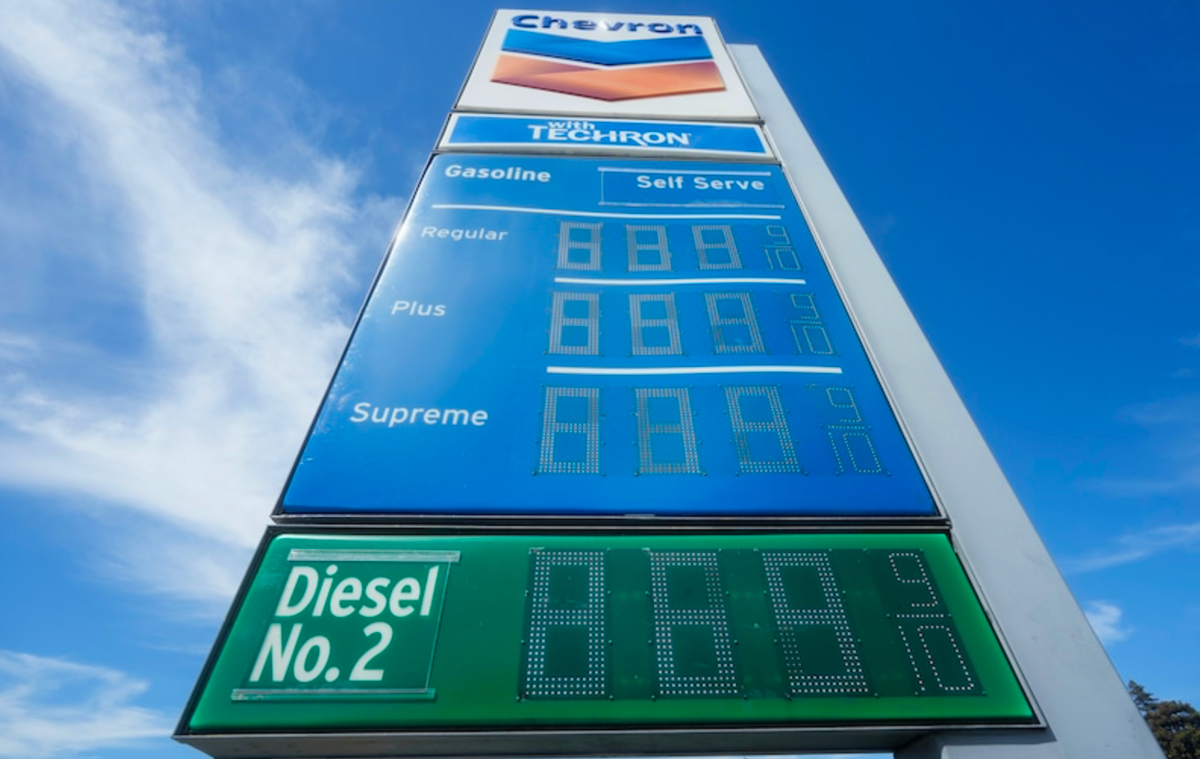
Oil shocks are often measured by the price of a barrel of crude. The wider economic effect can be easier to see at the diesel pump. Diesel powers trucks, rail freight, farm equipment and parts of the industrial economy. When its price rises, the cost reaches businesses moving goods long before it appears on a store shelf.
The pressure remains substantial. U.S. on-highway diesel averaged $6.38 a gallon on September 28, down from $6.53 the previous week but more than $2.60 above its level a year earlier. A weekly decline offers some relief to fleets buying fuel now. It does little to erase the cost of weeks spent operating at elevated prices.
The Refining Link
Crude oil is only one part of the diesel price. Refiners must turn it into usable fuel, and the wholesale price of diesel can climb faster than crude when finished supplies are tight. The gap between the two prices, known as the diesel crack spread, is a useful gauge of that pressure. Global distillate production has been constrained, while U.S. inventories have remained low despite strong domestic refinery output. That combination has kept diesel expensive even beyond the effect of higher crude prices.
Autumn adds another test. Refinery maintenance can reduce distillate production just as agricultural demand increases. Diesel also shares the distillate market with heating oil, making winter supply relevant to the price outlook. A change in crude prices alone, therefore, may give an incomplete picture of what freight operators will pay in the coming months.
From Fuel Tank to Freight Bill

The transmission into shipping costs is direct. Carriers buy fuel at current prices, while many customer contracts recover part of that expense through a fuel surcharge. UPS, for example, adjusts its U.S. ground surcharge weekly using the national diesel price reported by the Energy Information Administration. The adjustment gives shippers a visible price signal, but it also means higher diesel costs can keep appearing on freight bills after an oil shock has begun to fade.
Businesses then face choices: absorb the higher delivery bill, negotiate with suppliers, change routes or eventually raise prices. The result is not an automatic, equal increase in every consumer price. It depends on fuel intensity, contracts, competition and how long the shock lasts. Goods that travel repeatedly between farms, factories, warehouses and stores have more opportunities to accumulate transport costs along the way. Diesel’s importance lies in that reach across the supply chain.
The Pressure Beyond Trucking
Freight is only one route into the wider economy. Farms use diesel-powered machinery to plant and harvest crops, while rail operators use it to move large volumes of goods over long distances. The fuel also has a seasonal connection to heating oil in parts of the northeastern United States. When distillate supplies are tight, these users are drawing on a market already under pressure.
That overlap matters for businesses planning their next quarter. A food producer may face higher costs for farm operations and for moving its finished products. A retailer may pay more to replenish inventory even if its own energy bill barely changes. Each company’s ability to pass those costs along will differ, so diesel is best read as a source of potential price pressure across sectors, rather than a forecast for any single product.
What Could Bring Relief

A lasting improvement would require more than a brief drop at the pump. Higher distillate production, rebuilt inventories or improved international supply flows would give buyers more room to absorb seasonal demand. The Energy Information Administration expects diesel refining margins to decline over time in its September forecast, but that outlook assumes an improvement in tanker traffic through the Strait of Hormuz. Continued constraints would put that relief at risk.
For freight customers, timing matters as much as direction. A carrier’s fuel bill responds to today’s pump price; an indexed surcharge follows its published adjustment schedule. Even after diesel begins a sustained decline, shipping charges may take time to reflect it. Companies watching costs should therefore look for several weeks of easing in diesel and freight bills before treating one lower reading as a turning point.
MarketMind Insight
Watch three readings together: crude oil, the diesel crack spread and the retail diesel price paid by fleets. If crude falls while diesel stays high, the pressure is likely sitting in refining and finished-fuel supply. If diesel prices ease consistently, freight surcharges should eventually follow. Until then, the oil shock is still travelling through the economy—even when the headline barrel price suggests the worst has passed.