
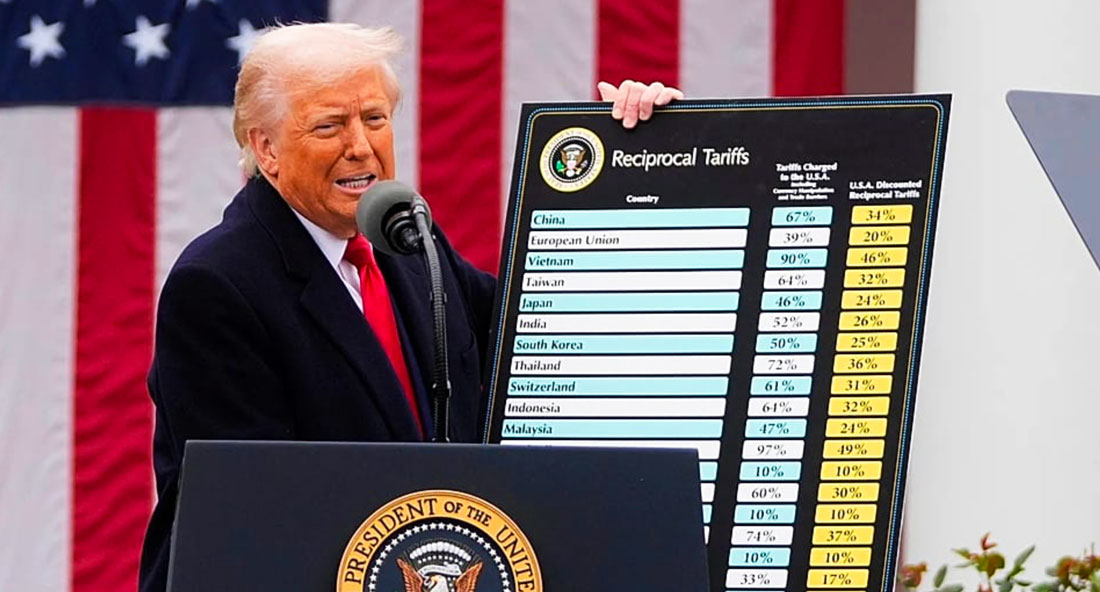
The White House has placed illegal transshipment at the centre of its latest customs-enforcement campaign, arguing that Chinese goods are increasingly being routed through lower-tariff countries before entering the United States. Limited assembly, repackaging, relabelling or altered documentation can then be used to present those products as originating somewhere other than China.
The financial incentive is straightforward. If a Chinese product faces a high U.S. tariff but the same product can enter from a third country at a substantially lower rate, disguising its origin creates an immediate profit opportunity. The difference between the two rates can be shared across manufacturers, intermediaries, logistics providers and importers.
A new White House analysis estimates that tens of billions of dollars in duties may be escaping collection each year. It also warns that the damage extends beyond customs revenue, potentially affecting domestic production, employment and the wider federal tax base.
Transshipment Is Not Automatically Illegal
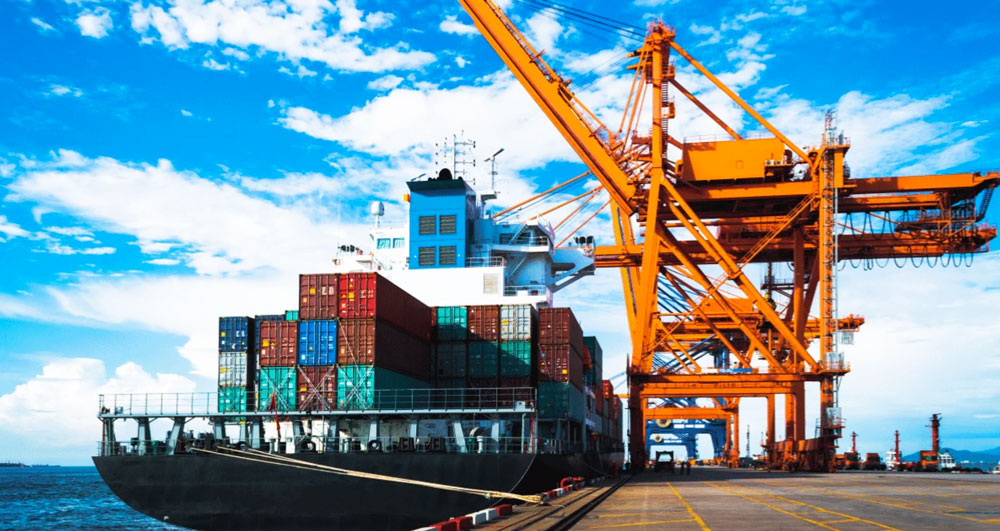
Transshipment is a normal part of international commerce. Goods frequently pass through foreign ports, logistics hubs and free-trade zones while travelling from a manufacturer to their final destination.
The legal problem begins when a third country is falsely declared as the country of origin. Moving merchandise through another port does not change where it was made. Neither does replacing packaging, applying new labels, transferring the goods into another container or issuing a new invoice.
A product’s origin can legally change when it undergoes sufficient manufacturing or processing in the intermediary country. This is generally known as substantial transformation. Depending on the product and applicable trade agreement, authorities may examine changes in tariff classification, local value added, manufacturing processes and the creation of a commercially distinct product.
That distinction separates legitimate supply-chain diversification from tariff evasion. A company establishing a real factory in Mexico or Vietnam may be conducting genuine nearshoring. A warehouse that simply removes “Made in China” labels and replaces them with local ones is something else entirely.
Why Tariff Gaps Encourage Origin Laundering
The expansion of differentiated U.S. tariffs has increased the potential reward from disguising origin. Chinese products may be subject to ordinary customs duties, Section 301 tariffs and, in certain industries, antidumping and countervailing duties.
These charges can accumulate. Some products face combined trade-remedy duties well above ordinary tariff levels, particularly in industries such as aluminum, solar equipment, household appliances, electrical components and construction materials.
Routing those goods through a country with a lower U.S. tariff can dramatically reduce the amount collected at the border. A shipment may also be presented as qualifying for preferential treatment under a free-trade agreement, potentially reducing the applicable duty to zero.
The White House describes more than 40 countries as presenting varying levels of transshipment risk. Major manufacturing and logistics economies such as Mexico, India, Vietnam, Malaysia, Thailand and South Korea feature prominently because of their established trade relationships with both China and the United States.
However, inclusion on a risk list does not prove that every shipment from a country is fraudulent. These economies also support extensive legitimate manufacturing. The enforcement challenge is identifying which products were genuinely transformed and which merely received a new passport.
Understanding the Revenue Estimates
The White House analysis reviews five estimates of possible illegal transshipment or related trade-transfer exposure. Those estimates range from approximately $40 billion to $303 billion annually.
The wide range reflects important differences in methodology. Narrower studies attempt to match particular products and shipping routes. Broader estimates examine changes in trade flows, supply-chain relationships and the replacement of direct Chinese imports with imports from other countries.
The figures are alternatives, not amounts that can be added together.
Using $75 billion as a central estimate for annual illegal transshipment, the report calculates approximately $19 billion in lost tariff revenue when the effective duty difference is 25 percent. The estimated loss rises to about $26 billion with a 35 percent differential and $34 billion when the gap reaches 45 percent.
The report separately estimates between $19 billion and $26 billion in lost federal receipts connected to the wider economic effects of reduced domestic production and gross domestic product. That calculation uses a historical relationship between federal revenue and GDP.
These are model-based estimates rather than audited totals of missing customs payments. The White House acknowledges that current trade and enforcement data arrive with a lag and that the effects of recently introduced measures cannot yet be determined conclusively.
The numbers therefore illustrate potential exposure. They should not be interpreted as a precise measurement of revenue that has already been proven to be missing.
Why Fraud Is Difficult to Separate From Real Investment
Tariffs naturally change supply chains. Companies may relocate manufacturing, use alternative suppliers or invest in factories closer to their customers. These adjustments are part of the intended economic response to trade policy.
The difficulty is that legal supply-chain restructuring can resemble illegal transshipment in aggregate trade data. A decline in direct imports from China accompanied by higher imports from Mexico or Southeast Asia may indicate genuine production relocation, tariff evasion or a mixture of both.
Customs authorities must look beneath the headline trade numbers. Relevant evidence can include:
- The location of the actual manufacturer
- The origin of major components and raw materials
- Production equipment available at the declared factory
- The processing performed in the intermediary country
- Bills of lading and previous shipping routes
- Related-party relationships and beneficial ownership
- Whether declared exports exceed plausible local production capacity
- Differences between commercial invoices and customs documents
A sudden increase in exports from a country without a corresponding increase in manufacturing capacity can be a warning sign. It is not proof on its own, but it can justify closer inspection.
Customs Enforcement Is Moving From Paperwork to Data
The administration’s June 2026 customs-enforcement order directs U.S. Customs and Border Protection to strengthen importer accountability, ownership disclosure, bonding requirements and supply-chain reporting.
The order calls for importers of record to disclose more information about beneficial owners, affiliates, anticipated import volumes and domestic assets. It also directs authorities to increase audits, tighten requirements for foreign importers and impose stronger penalties for repeated violations.
Several of these changes are still being implemented. Their full effect will depend on the regulations, guidance and enforcement practices that follow.
The White House is also promoting an AI-supported system described as the “Detective Border.” The proposed approach would combine shipment records, routing histories, product classifications, ownership links, production capacity and inspection data to identify suspicious entries.
Instead of reviewing documents individually after goods have entered the country, the system is intended to flag inconsistencies before or during the import process. An exporter claiming that a product was manufactured in a small facility could attract scrutiny if shipment volumes exceed the facility’s realistic capacity.
AI will not determine origin by itself. Country-of-origin decisions involve product-specific legal standards and evidence about manufacturing. Its immediate value is prioritization: finding the small number of high-risk shipments hidden inside an enormous volume of legitimate trade.
The Liability Can Land on the U.S. Importer
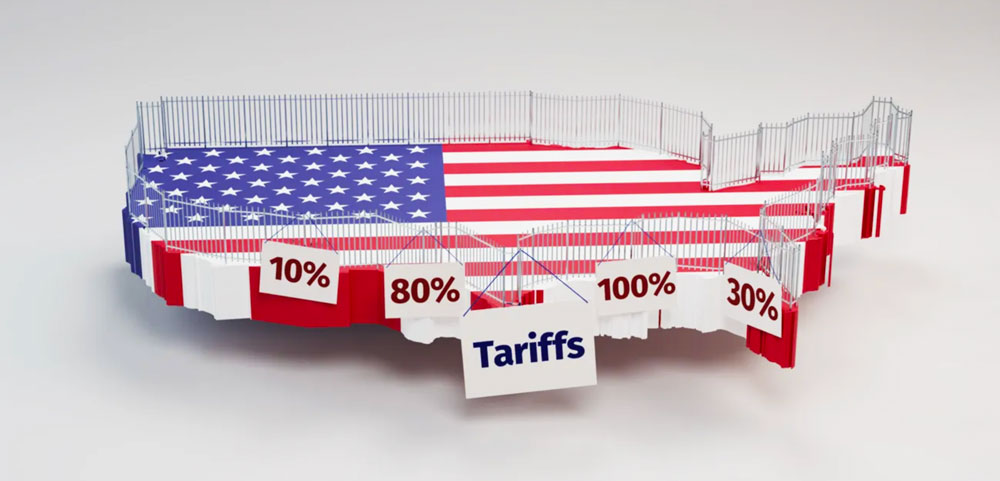
Importers cannot automatically transfer customs responsibility to foreign suppliers or brokers. The importer of record remains responsible for exercising reasonable care and ensuring that entry documents, product classifications, customs values and origin declarations are accurate.
If CBP later determines that goods were Chinese-origin, the importer could face retroactive duties. Those assessments may include Section 301 tariffs and potentially much larger antidumping or countervailing duties.
Additional consequences can include interest, civil penalties, increased bonding requirements, shipment detention, seizure or exclusion from future importing. Deliberate schemes involving false invoices, fabricated certificates or concealed ownership can also create criminal exposure.
Businesses importing through third countries therefore need documentation that proves more than the final shipping location. They should be able to demonstrate what manufacturing occurred, where important components originated and why the finished product satisfies the applicable origin rule.
Supplier assurances are no longer enough. The paperwork needs to match the physical supply chain.
Third Countries Face Their Own Compliance Test
Countries benefiting from redirected manufacturing will increasingly be expected to distinguish legitimate investment from pass-through trade. Stronger certificate verification, factory inspections, production-capacity checks and information sharing with U.S. authorities are likely to become conditions of continued market access.
Recent U.S. trade arrangements have placed greater emphasis on rules preventing agreement benefits from flowing primarily to third countries. This approach gives Washington more flexibility to tighten origin requirements when Chinese content appears to be entering through an agreement partner.
The result could be a division between trusted manufacturing hubs with transparent supply chains and jurisdictions viewed primarily as relabelling or re-export platforms. Countries that fail to strengthen enforcement could face additional tariffs, more inspections or narrower access to preferential trade treatment.
MarketMind Insight
Illegal transshipment exposes the weak point in a tariff-based trade strategy: a duty is only as effective as the system used to determine origin and collect it. The White House’s revenue estimates are not final audited losses, but they demonstrate how quickly tariff leakage can become economically significant when large trade volumes meet wide differences in duty rates. Higher tariffs create stronger incentives for domestic investment, but they also make fraud more profitable.
For companies, customs compliance is becoming a core tax and supply-chain risk rather than a back-office documentation exercise. For governments, the next phase of tariff policy will be built around traceability, importer accountability and evidence of real manufacturing. The winners will be businesses and trade partners capable of proving where products were made. In the emerging customs system, a certificate of origin may open the door—but the underlying data will decide whether the shipment gets through.