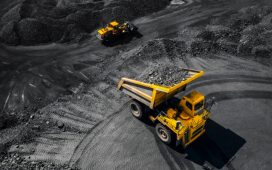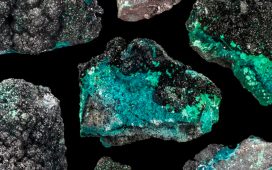
Lynas Rare Earths’ proposed acquisition of Meteoric Resources would bring Brazil into its mining portfolio and give the company access to a substantial new source of rare earths. Announced on October 1, the all-share transaction values Meteoric at approximately A$968 million on a fully diluted basis. At the centre of the agreement is Caldeira, a development project in Minas Gerais that would expand Lynas’s resource base beyond its Mt Weld operation in Western Australia.
The strategic attraction is clear: a broader supply base, geographical diversification and access to materials used in high-performance magnets. The investment case, however, depends on turning that resource into reliable commercial production. Caldeira brings development obligations alongside its geological potential, making construction costs, processing performance and downstream integration central to assessing the expansion.
A Share Deal With a Moving Value
Under the proposed scheme, Meteoric shareholders would receive 0.0207 new Lynas shares for each Meteoric share. Based on the reference price used in the announcement, that implied approximately A$0.286 per Meteoric share—a 68.4% premium to its previous closing price. Because the exchange ratio is fixed, the monetary value of the consideration changes with Lynas’s share price.
For Meteoric shareholders, the transaction would replace direct ownership of a development company with a stake in an established rare earths producer. They would retain exposure to Caldeira through the combined business while also gaining exposure to Lynas’s operating assets. For existing Lynas shareholders, the calculation runs in the other direction: they would share ownership of the company more widely in exchange for an additional resource and its future earning potential.
Paying with shares preserves cash for development, but it still carries an economic cost through dilution. The relevant question is whether Caldeira can generate sufficient additional value to justify the ownership issued to acquire it and the capital required to bring it into production.
What Caldeira Adds
Caldeira is an ionic clay rare earth project near Poços de Caldas in southwestern Minas Gerais. Meteoric reports a mineral resource of approximately 1.6 billion tonnes, providing a substantial geological base for development. Its definitive feasibility study outlines an operation lasting more than 20 years, although the broader resource should not be confused with material already established as economically recoverable within the mine plan.
The composition of its planned output is particularly important. Meteoric’s July feasibility study projected average annual production of approximately 12,500 tonnes of total rare earth oxides, including 3,862 tonnes of neodymium and praseodymium and 127 tonnes of dysprosium and terbium. These figures are development projections rather than current production.
Neodymium and praseodymium are used in high-performance permanent magnets, while dysprosium and terbium help certain magnets retain performance at higher temperatures. That gives Caldeira relevance to electric motors, wind turbines and other demanding industrial applications. For Lynas, the strategic value therefore rests on the recoverable product mix and its suitability for customers, as well as the size of the deposit.
A Different Deposit Requires a Different Processing Approach
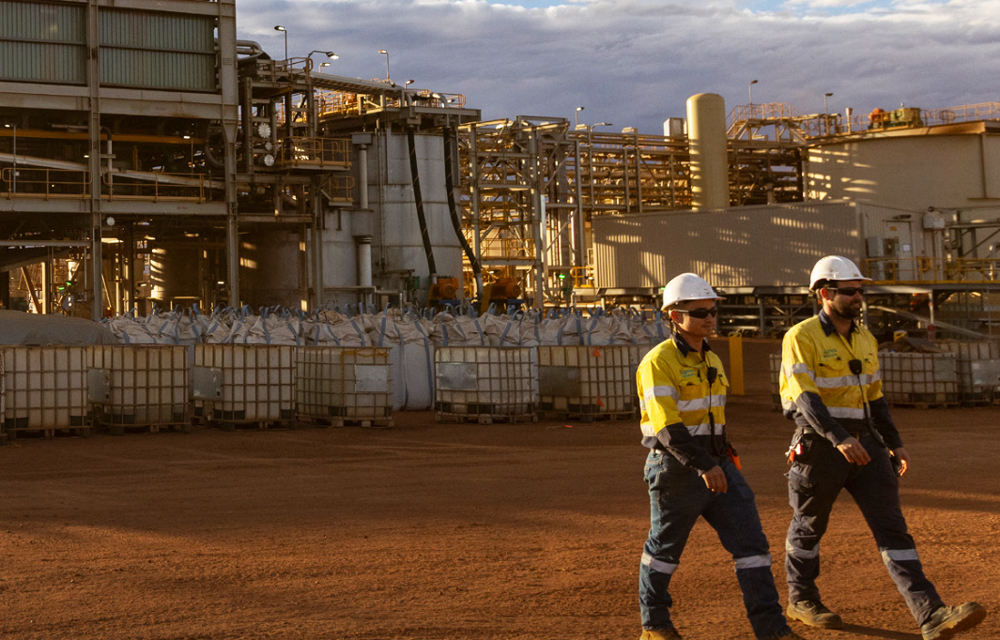
Caldeira’s clay-hosted mineralisation differs from the hard-rock material mined at Mt Weld. Meteoric’s proposed process uses an ammonium-based wash to recover rare earths into mixed rare earth carbonate. The soft material can be excavated without conventional drilling and blasting, while the proposed residue management involves dewatering and returning material to mined areas.
These characteristics underpin Meteoric’s expectations for relatively low capital and energy intensity. They still require confirmation through commercial operation. Recoveries, reagent consumption, water management and product consistency must hold up across changing feed conditions and sustained production.
Mixed rare earth carbonate is also an intermediate product. Further separation is needed to produce individual rare earth materials, so successful extraction is only one part of the commercial chain. Caldeira’s value to Lynas depends on how efficiently its output can be processed into saleable products, including the costs of handling impurities and meeting customer specifications.
Lynas brings substantial separation and operating experience to that task. The analytical distinction is between possessing relevant expertise and demonstrating the performance of a particular feedstock at commercial scale. Investors need evidence of the complete processing route before treating projected output as dependable future earnings.
The Construction Bill Remains
Lynas expects Caldeira’s development capital expenditure to exceed US$500 million. It has also committed an interim funding facility of up to A$110 million to support continued development during the transaction process. The acquisition consideration and the project’s construction requirement are separate commitments.
The all-share structure preserves financial capacity, but the construction programme still requires a firm budget, financing arrangements and disciplined execution. Engineering, equipment procurement, infrastructure and commissioning will determine how much money is spent before the project can generate revenue.
The most useful milestones are therefore concrete: an approved development plan, the required licences, funding commitments and a construction schedule supported by detailed engineering. Delays or cost increases would affect returns even if the underlying resource remained attractive. A large deposit provides opportunity; the cost and timing of accessing it determine how much of that opportunity reaches shareholders.
Brazil’s Role Could Extend Downstream
Lynas has said it will study additional downstream processing in Brazil. That aligns with the country’s ambition to capture more value from critical minerals through separation and subsequent manufacturing. Such processing remains under evaluation, rather than an announced, fully funded development.
The eventual location and configuration of separation capacity will influence transport costs, capital requirements and Caldeira’s integration with Lynas’s wider operations. Developing facilities in Brazil would create a broader local industrial presence, while also introducing another investment decision alongside the mine and initial processing plant.
The proposed acquisition remains subject to shareholder, court and regulatory conditions, including Brazilian approval. Transaction clearance and project licensing are separate requirements. Completing the acquisition would establish ownership of Caldeira, but it would not by itself complete the approvals or development work needed for commercial production.
MarketMind Insight
The proposed Meteoric acquisition gives Lynas a substantial Brazilian asset around which to expand its supply strategy. It offers geographical diversification and potential access to a useful combination of light and heavy magnet rare earths, supported by Lynas’s existing technical experience and customer relationships.
The financial case now depends on execution. Investors should assess the construction budget, processing route, financing and development milestones alongside the resource figures. Caldeira’s scale establishes the opportunity, while consistent product quality, controlled spending and reliable production will determine the return.
Brazil would become an important new part of Lynas’s resource portfolio if the transaction proceeds. The next stage is proving how that broader portfolio translates into dependable supply and value per share.