
OPEC+ heads into its Sunday, October 4 meeting with a question that reaches beyond whether production targets should rise, fall or remain unchanged: how much oil can its members actually bring to market? After months of disruption to Gulf production and shipping, the distance between an agreed quota and a delivered cargo has become central to understanding the alliance’s influence.
Seven participating producers—Saudi Arabia, Russia, Iraq, Kuwait, Kazakhstan, Algeria and Oman—are scheduled to review market conditions after holding October’s required production levels unchanged from September. As of October 1, Sunday’s decision has not been announced. The useful preview therefore begins with the physical market: operating fields, available export routes and barrels reaching refiners.
How Much Oil Is Actually Being Produced?
The production recovery remains incomplete. OPEC data show that the seven participating producers pumped approximately 25 million barrels per day in August, an increase of 630,000 barrels per day from July but still roughly 5 million below February’s pre-war level. Those figures describe actual output, rather than the production levels established through policy agreements.
That distinction changes how Sunday’s announcement should be interpreted. Where a producer is operating below its target because of disruption, maintaining the target leaves room for production to recover. Physical supply can therefore increase without a fresh quota increase. Conversely, raising a target does little immediately if the producer cannot restore operations or move additional oil through its export system.
The analytical implication is straightforward: the size of a policy adjustment cannot be treated as the size of the resulting supply change. Assessing that change requires country-level production evidence and a clear understanding of what is preventing each producer from delivering more.
Can the Export System Carry the Recovery?
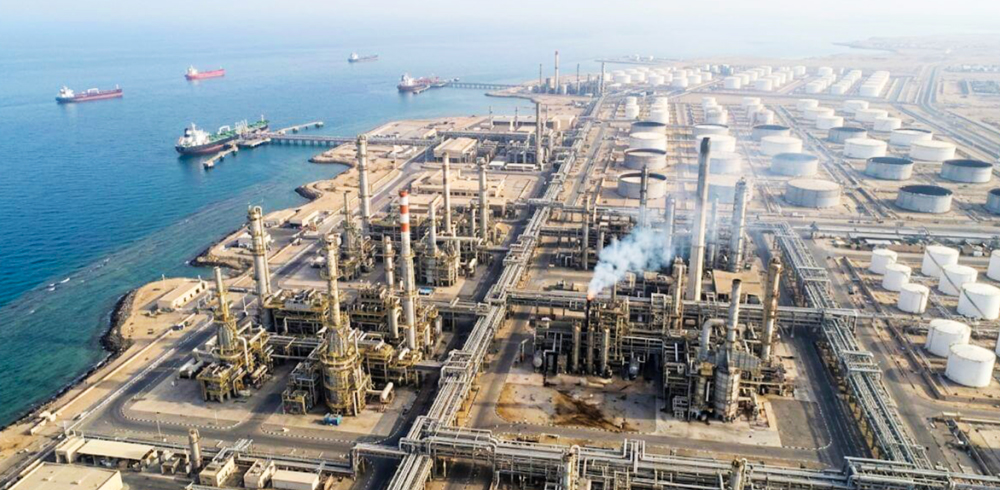
Production is only one stage of the journey. Oil must move through gathering systems, pipelines, storage terminals and loading facilities before a tanker carries it to a buyer. A bottleneck anywhere along that route can restrict exports even when fields have the capacity to produce more.
September’s shipping data show a recovery, although the figures remain preliminary. Updated estimates put crude exports from seven major Middle Eastern producers at approximately 16.3 million barrels per day, compared with about 19.5 million in February. This is a regional shipping measure covering a different group of countries from Sunday’s seven participants; it should not be presented as their collective production or quota performance.
Saudi Arabia’s resumption of exports through its East-West pipeline and the Red Sea port of Yanbu adds another important element. Alternative routes provide flexibility when Gulf shipping is disrupted. Their practical value depends on sustained throughput, functioning terminals and reliable loading operations. A route’s advertised capacity and its current export contribution are different measurements.
For Sunday’s assessment, the question is whether recovering shipments can be sustained across successive weeks. A burst of tanker departures establishes movement; dependable delivery requires the whole export system to keep working.
Quotas, Production and Exports Measure Different Things
A quota establishes a producer’s agreed production level. Actual production measures what it pumps. Exports measure what leaves the country after domestic use and changes in storage are taken into account. Delivered barrels add the final step: cargoes reaching their destination.
These measures can move in different directions. A country can increase exports by drawing down stored crude while production remains steady. It can also raise production while retaining more oil for domestic refining or replenishing inventories. Neither movement, by itself, establishes a lasting increase in supply available to overseas buyers.
This is why export growth should be assessed alongside production and inventories. If higher shipments are supported by restored output, the recovery has a different foundation from one supported by stock withdrawals. Likewise, higher production provides limited immediate relief to importers when additional barrels remain in storage or await transport.
What Counts as Usable Capacity?

Capacity matters most when it can be operated consistently and connected to a working delivery route. The ability to lift production briefly does not establish how much a country can sustain over several months. Nor does spare field capacity automatically translate into spare export capacity.
This distinction also matters for future OPEC+ agreements. Production baselines underpin the allocation of quotas, making assessments of sustainable capacity consequential for how supply rights are distributed. The debate extends beyond the next monthly adjustment: it concerns the production levels that members can credibly maintain.
For buyers, the practical test is broader still. Additional crude must arrive at the right location, at a usable time and with characteristics suited to the receiving refinery. Aggregate barrel counts are essential, but they do not capture every constraint facing the physical market.
Would More Crude Resolve Fuel Tightness?
OPEC’s September report highlighted tight diesel supplies in Europe and strength in middle distillate margins in the United States. That reinforces another distinction relevant to Sunday: crude availability and finished-fuel availability are connected, but they are separate stages of supply.
Refineries must process crude into diesel, gasoline and jet fuel before those products can reach consumers. Refinery operations, product yields and distribution capacity influence how quickly an improvement in crude supply reaches the pump. Consequently, recovering oil exports should be evaluated alongside refinery activity and fuel inventories.
MarketMind Insight
Sunday’s meeting deserves attention, but the strongest assessment will combine the policy statement with evidence from the following weeks. Production estimates show whether fields are recovering. Pipeline and terminal activity show whether export infrastructure is functioning. Cargo movements and arrivals show whether buyers are receiving the oil.
An unchanged quota can accompany a meaningful supply recovery. A higher quota can accompany little immediate improvement. The difference lies in operational performance and delivery.
For OPEC+, the central question is how much of its agreed production can become dependable supply. For the wider economy, the test continues through the refinery and into fuel distribution. The announcement sets the policy; delivered barrels establish its practical effect.