
Anglo American and Teck Resources have spent the past year assembling one of the mining industry’s most consequential combinations. Shareholders have approved the all-share merger, Canada has secured investment commitments, and competition authorities across Australia, Chile, the European Union, Japan, Mexico, South Korea and the United States have cleared the transaction. Yet the roughly $54 billion deal cannot cross the finish line without one final major decision: approval from China.
The proposed company, Anglo Teck, would bring together copper operations stretching from Chile and Peru to Canada. It would rank among the world’s five largest copper producers, with more than 70% of its portfolio exposure tied to copper. That concentration is precisely what makes the transaction attractive to investors—and strategically important to Beijing.
A Merger Built Around Copper
Anglo American and Teck describe the transaction as a merger of equals, although Anglo shareholders would initially own approximately 62.4% of the combined company and Teck investors would hold 37.6%. Anglo Teck would be headquartered in Vancouver, retain its primary listing in London and seek additional listings in Toronto and New York.
The immediate investment case rests on size, diversification and copper growth. The companies expect approximately $800 million in recurring annual pretax synergies within four years of completion. An even larger opportunity comes from coordinating Teck’s Quebrada Blanca operation with Anglo American’s neighbouring Collahuasi interest in Chile. Shared infrastructure, coordinated processing and operational integration could eventually add roughly 175,000 tonnes of annual copper production and generate an estimated $1.4 billion in average annual underlying EBITDA between 2030 and 2049.
The combined group would also control substantial zinc, premium iron ore and crop-nutrient assets, but copper is the centre of gravity. Electricity grids, electric vehicles, renewable generation, defence systems and power-intensive data centres are all competing for a metal whose supply cannot be expanded quickly. New mines frequently require more than a decade to discover, permit, finance and construct. Buying an established producer can therefore be faster than building equivalent capacity from scratch.
Why China Has Jurisdiction
Neither Anglo American nor Teck is based in China, but that does not place the transaction beyond Beijing’s reach. Chinese competition rules can apply to international mergers when the companies generate sufficient revenue in the country or when their combination could affect competition within the Chinese market.
China is also the largest consumer, importer and processor of many industrial metals. Its manufacturers, smelters, grid operators and construction companies depend heavily on imported mineral feedstock. A merger involving major copper suppliers can therefore affect Chinese buyers even when the mines themselves are located thousands of kilometres away.
Anglo Teck would represent only a modest share of total global copper production, estimated at around 5%. That may appear too small to create a conventional monopoly problem. Copper, however, is not a perfectly uniform market. Regulators can examine the availability of particular concentrates, the location and quality of supply, sales contracts, treatment charges and the bargaining power held by large mining groups. Control over future projects can matter almost as much as current output.
China’s review has taken longer than those conducted in other major jurisdictions, and its regulatory timetable has reportedly been paused. That does not amount to a rejection. The companies continue to target completion within the original window running from September 2026 through March 2027. No Chinese remedy or concession has been publicly announced.
The Las Bambas Precedent
Mining executives have good reason to take China’s review seriously. When Glencore sought approval to acquire Xstrata in 2013, Chinese regulators imposed extensive conditions. The most significant required Glencore to sell the Las Bambas copper project in Peru. The asset was subsequently acquired by a consortium led by China Minmetals-controlled MMG for nearly $6 billion.
Glencore was also required to maintain specified supplies of copper, zinc and lead concentrates to Chinese customers under agreed commercial arrangements. The decision demonstrated that Beijing could use merger control to protect domestic access to internationally produced raw materials.
That history does not mean Anglo American and Teck will face equivalent demands. The competitive structure, asset portfolio and political environment are different, while any remedy would need to address the circumstances of the present transaction. Nevertheless, Las Bambas establishes that Chinese approval of a global mining merger can come with consequences extending well beyond a routine legal sign-off.
Possible outcomes range from unconditional clearance to behavioural commitments governing supply or commercial practices. Asset sales would represent a more severe remedy, but there is no public confirmation that China has requested one. For investors, the distinction is critical: limited commitments might preserve most of the merger’s economics, while a forced divestment could reduce growth, alter expected synergies or delay completion further.
Metals Have Become Instruments of State Policy
The Anglo-Teck review illustrates how the definition of competition is changing. Governments are no longer looking solely at current market share and consumer prices. They are increasingly considering supply-chain resilience, national security, industrial policy and control over future production.
China wants reliable access to the concentrates feeding its enormous refining and manufacturing system. The United States, Canada and Europe are simultaneously trying to reduce dependence on Chinese processing, build domestic capacity and strengthen relationships with mineral-producing countries. Copper sits directly between those objectives. It is commercially traded across borders but increasingly treated as strategic infrastructure.
The tension extends beyond copper. Transactions involving lithium, nickel, cobalt, uranium and rare earth minerals now attract political attention because ownership can influence where material is processed, which customers receive priority and where the next generation of mines is developed. Governments that once welcomed consolidation as a route to efficiency may now see the same deals as potential transfers of strategic leverage.
This creates a complicated environment for multinational miners. A company may satisfy one government by promising domestic investment, employment and a local headquarters, only to face demands from another jurisdiction concerned about access to the resulting production. Commitments that resolve one country’s concerns can even make approval elsewhere more difficult.
The New Cost of Mining Consolidation
Mining companies are pursuing mergers partly because developing new supply has become slower and more expensive. Ore grades are declining at mature deposits, capital costs have risen and community or environmental opposition can delay construction. Large producers can combine balance sheets, share infrastructure and fund projects that might be difficult for smaller companies to advance independently.
But regulatory uncertainty is becoming another transaction cost. Extended reviews delay synergies, retain duplicate corporate expenses and leave management teams operating in limbo. Financing assumptions can change while approval is pending, especially when metal prices, currencies and interest rates are moving sharply. A remedy negotiated late in the process can also rewrite the valuation on which shareholders originally voted.
The risk is not limited to Anglo American and Teck. Any future mining combination with meaningful sales into China may require Beijing’s approval, regardless of where the companies are incorporated. At the same time, Chinese acquisitions of overseas mineral assets face intensifying examination from Western regulators. Capital is effectively being squeezed from both directions.
What Investors Should Watch
The first signal will be whether China restarts and completes its review without structural conditions. Investors should then examine the precise language of any commitments, particularly those involving copper supply, pricing practices, marketing arrangements or the disposal of assets.
Timing matters as well. The companies continue to expect completion by March 2027, but a prolonged review would push back the realization of corporate synergies and could complicate integration planning. Operational performance at Quebrada Blanca is another important variable because much of the merger’s long-term value depends on stabilizing and expanding that complex.
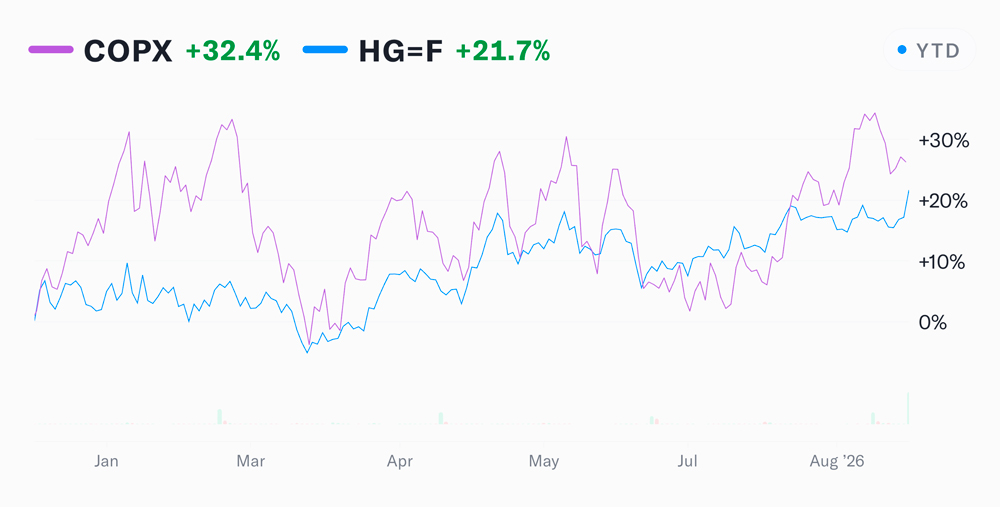
Copper prices add a final layer. A stronger market increases the value of Anglo Teck’s portfolio, but it can also intensify political concern about supply security and strengthen regulators’ incentive to seek protections for domestic buyers. High prices are therefore both an argument for the merger and a reason governments may scrutinize it more closely.
MarketMind Insight
China’s decision will matter far beyond one transaction. Approval without major conditions would suggest that even the largest copper-focused mergers can still proceed when production remains geographically dispersed. Heavy remedies would send the opposite message: control over strategic minerals is now important enough for governments to reshape international deals involving assets outside their borders.
For mining investors, geopolitical approval risk can no longer be treated as a footnote beneath production forecasts and commodity prices. It belongs directly in valuation models alongside capital expenditure, ore grades and operating costs. The world needs larger investment in metals, but governments increasingly want influence over who owns the supply, where it is processed and who gets to buy it. Anglo Teck may be a corporate merger on paper; in practice, it is becoming a test of how much power states intend to exercise over the next generation of global mining.