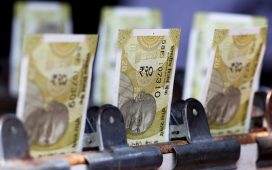
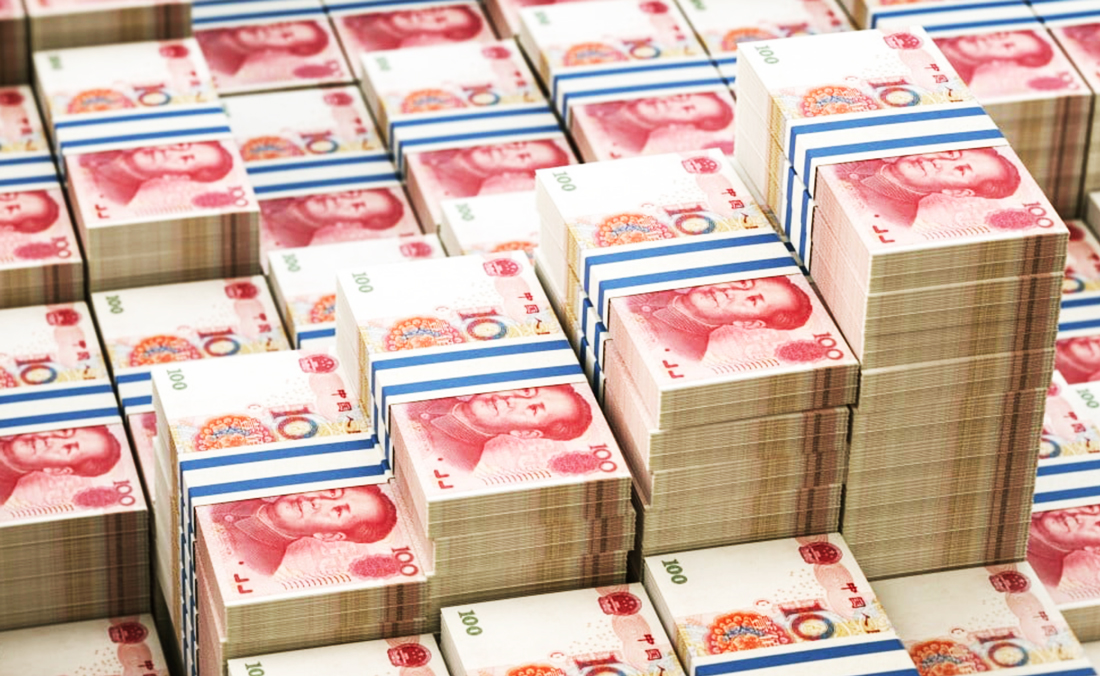
China’s currency is doing something that once looked unlikely: strengthening while the domestic economy remains uneven and trade tensions stay elevated. As of September 1, 2026, the onshore yuan was trading near 6.72 to the U.S. dollar, close to its strongest level in roughly three and a half years. It has gained nearly 9% against the dollar over the past 20 months, supported by large trade surpluses, exporter demand for yuan and periods of broad dollar weakness. Yet Beijing is not treating that appreciation as an unqualified success. The People’s Bank of China is allowing the currency to remain firm while actively resisting a rise fast enough to damage exporters, tighten financial conditions or undermine employment.
That is the essence of the yuan’s managed resilience. Beijing does not appear to be pursuing the weakest possible currency, nor is it allowing market forces to determine the exchange rate without restraint. It is trying to keep the yuan strong enough to preserve confidence and financial stability, but restrained enough to protect an export sector that continues to carry an outsized share of China’s growth burden. The result is less a freely floating currency than a carefully supervised adjustment process.
A Stronger Yuan, but Not a Free Float
China describes the renminbi as operating under a managed floating exchange-rate system. Each trading day, the authorities publish a central reference rate against the dollar, and the onshore currency is permitted to move within a 2% band on either side. Market supply and demand influence where the yuan trades, but the daily reference rate, regulatory guidance, state-bank activity and macroprudential rules give Beijing considerable influence over both direction and speed.
During earlier periods of depreciation pressure, those tools were used to slow the yuan’s decline. In 2026, the challenge has reversed. The PBOC has repeatedly set its daily midpoint weaker than market models implied, signalling that officials do not want dollar weakness and China’s export earnings to produce an uncontrolled surge in the yuan. Major state-owned banks have also been reported buying dollars in the domestic market, an action that absorbs some of the foreign currency being sold by exporters and tempers upward pressure on the renminbi.
The policy signal became even clearer in February, when the PBOC removed the 20% risk-reserve requirement on certain foreign-exchange forward transactions, effective March 2. That reduced the cost of buying dollars forward and reversed a rule previously used to discourage bets against the yuan. Beijing’s toolkit is therefore deliberately two-sided: the same system that can resist depreciation can also be turned around to resist excessive appreciation.
Exports Are Both the Cushion and the Constraint
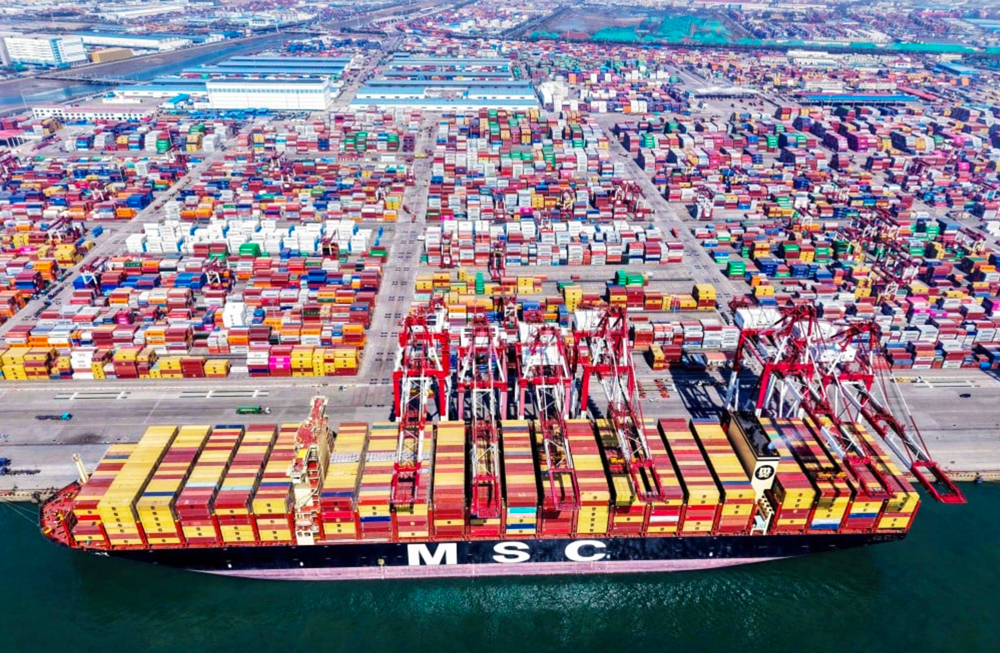
China’s export performance explains why the yuan is under upward pressure and why policymakers are reluctant to let it rise too quickly. Customs data showed exports increasing 23.9% from a year earlier in July to about $397.9 billion, while imports rose 27.5% to roughly $285.4 billion. The monthly goods surplus reached $112.5 billion, bringing the surplus for the first seven months of 2026 to approximately $687.4 billion. High-technology products, electronics and advanced manufacturing have supplied much of the momentum, helping China offset weak household demand, a prolonged property adjustment and cautious private investment.
Large export receipts create natural demand for the yuan when companies convert dollars and other foreign currencies to cover wages, taxes and domestic expenses. In a fully flexible market, those flows would normally produce more appreciation. But a rapidly strengthening yuan would reduce the domestic-currency value of overseas revenue and squeeze exporters whose costs are largely paid in renminbi. Large technology manufacturers may be able to absorb that pressure through productivity and higher-value products; smaller producers in textiles, furniture, toys and other price-sensitive industries have much less room.
Beijing is therefore trying to preserve competitiveness without making devaluation the centre of its trade strategy. A steady or gradually appreciating currency still allows productive exporters to compete, while avoiding the destabilizing message that China needs a falling yuan to support growth. The ideal outcome for policymakers is not a permanently cheap currency. It is a currency whose movement is slow enough for companies to adjust prices, hedge exposure and move further into higher-margin production.
Why Currency Stability Carries Its Own Economic Value
There are also clear costs to holding the yuan too weak. A sharp decline would raise the renminbi cost of imported energy, commodities, semiconductors and industrial inputs. It could encourage households and companies to retain more dollars, revive capital-outflow pressure and make monetary easing more difficult. It would also weaken Beijing’s effort to expand use of the renminbi in trade, finance and reserve management. A currency marketed internationally as a reliable alternative cannot look vulnerable to repeated policy-driven devaluations.
Stability supports China’s domestic financial system as well. The country held about $3.419 trillion in foreign-exchange reserves at the end of July, providing a substantial buffer against external stress. In the first half of 2026, the renminbi accounted for 52.9% of China’s cross-border settlements, up from the full-year share in 2025. Chinese companies also contracted nearly $1.4 trillion in foreign-exchange derivatives, and the corporate hedging ratio rose to 35.3%. These figures suggest that Beijing is not relying on the exchange rate alone: it is encouraging companies to invoice in yuan, hedge currency risk and become less sensitive to every short-term move in the dollar.
A stronger yuan can also support purchasing power by making imported goods and inputs cheaper. In an economy struggling with subdued prices rather than excessive inflation, that benefit is not entirely straightforward, because cheaper imports can reinforce disinflation. Still, measured appreciation can raise the real spending power of Chinese consumers and businesses while improving the appeal of yuan-denominated assets. Beijing’s balancing act is therefore broader than exports. It also involves confidence, capital flows, financial opening and the currency’s international credibility.
The Surplus Does Not Tell the Whole Currency Story
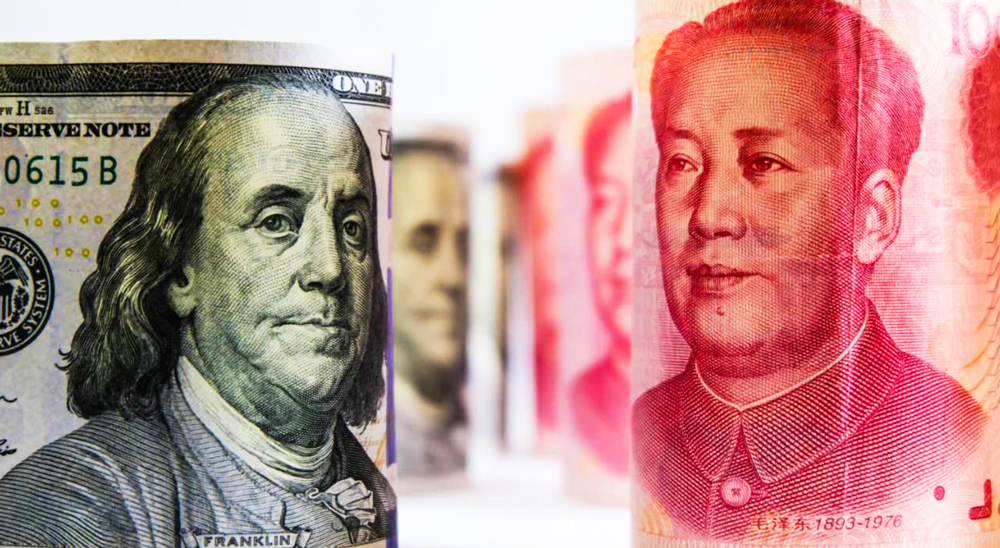
China’s external accounts show why upward pressure on the yuan is powerful but not automatic. The country recorded a current-account surplus of about $379.4 billion in the first half of 2026, including a $526.3 billion surplus in goods trade. At the same time, the capital and financial accounts, including statistical discrepancies, registered a deficit of roughly $383.2 billion. Chinese banks, companies and investors continue to acquire overseas assets, while low domestic yields can make foreign markets attractive.
This creates a partial offset. Trade brings foreign currency into China, but outward investment and portfolio allocation send capital in the other direction. The exchange rate sits between those forces. That is why a record or near-record trade surplus does not guarantee uninterrupted appreciation, and why Beijing watches corporate conversion behaviour, capital flows and interest-rate differentials alongside headline export data.
The distinction between the yuan’s dollar value and its broader competitiveness is also important. A stronger renminbi against the dollar may partly reflect a weaker U.S. currency rather than a large improvement against all of China’s trading partners. Relative inflation matters as well. China’s lower inflation compared with many trading partners has kept its real exchange rate more competitive than the bilateral dollar move alone suggests. For exporters, the trade-weighted and inflation-adjusted value of the yuan is often more consequential than whether the dollar-yuan rate crosses a psychologically important number.
The International Pressure Point
China’s strategy remains exposed to criticism from major trading partners. The International Monetary Fund has linked China’s low inflation and real exchange-rate depreciation to stronger exports and a wider current-account surplus, while urging a transition toward consumption-led growth and greater exchange-rate flexibility. The U.S. Treasury kept China on its currency Monitoring List in July 2026 and again raised concerns about the limited transparency surrounding official and state-bank activity. It did not designate China a currency manipulator, but warned that resistance to appreciation would remain under close scrutiny.
That distinction matters. Beijing can credibly argue that the yuan has appreciated substantially against the dollar and that it has no need to engineer a large devaluation. Trading partners can respond that the currency may still be weak relative to China’s productivity, external surplus and low domestic prices. Both observations can be true at once. The yuan can be rising in nominal dollar terms while still appearing undervalued under broader economic models.
The political risk grows if China’s trade surplus expands while the authorities visibly cap appreciation. A stable currency may protect exporters in the short term, but it can also intensify accusations that exchange-rate management is preventing a normal external adjustment. That raises the possibility of more tariffs, trade remedies or diplomatic pressure—costs that could eventually exceed the benefit of holding the yuan slightly weaker.
What Markets Should Watch
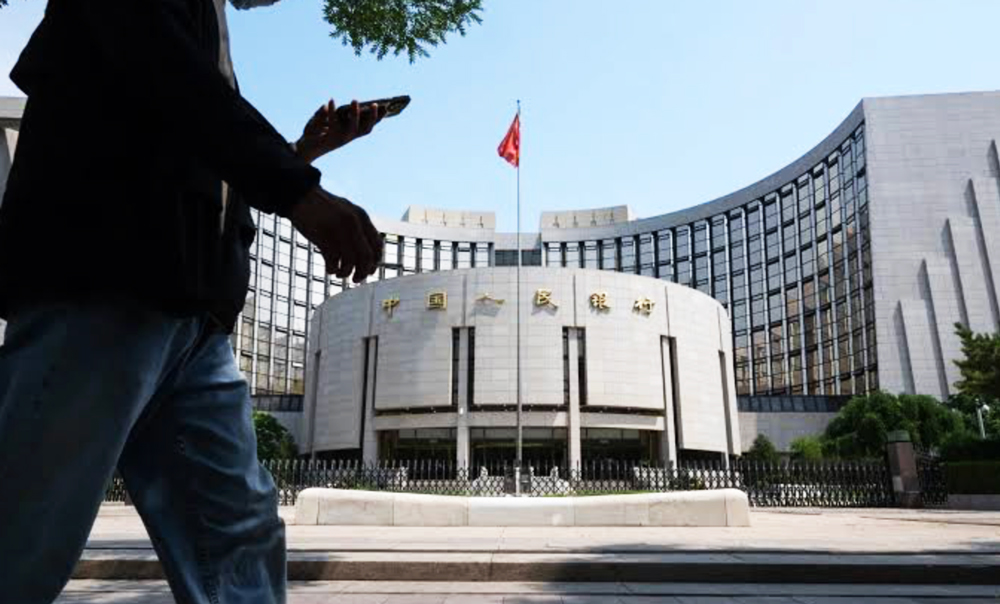
The most important signal is not a single exchange-rate target but the gap between the daily fixing and market expectations. A persistently weaker-than-expected midpoint indicates that the PBOC is leaning against appreciation; a narrowing gap would suggest greater tolerance for market-driven strength. State-bank dollar purchases, exporter conversion rates, offshore yuan liquidity and changes to foreign-exchange reserve rules offer additional clues. Investors should also watch the dollar cycle, Chinese and U.S. interest-rate differentials, the trade-weighted CFETS index and whether domestic demand begins to replace exports as a more reliable source of growth.
If consumption and private investment strengthen, Beijing could tolerate a firmer yuan because the economy would be less dependent on foreign demand. If domestic weakness persists, policymakers are more likely to keep appreciation gradual even when trade flows support a stronger currency. The central bank’s preferred outcome is likely continued two-way movement within a controlled range, with enough flexibility to respond to the dollar but not enough momentum to invite one-sided speculation.
MarketMind Insight
The yuan’s resilience is real, but it is also curated. China’s trade surplus, large reserve buffer and growing use of renminbi settlement give the currency substantial support. Beijing’s daily fixing, regulatory tools and influence over state banks determine how quickly that support is allowed to appear in the exchange rate. The objective is not simply to keep exports cheap. It is to protect export earnings without triggering capital flight, imported-cost pressure, trade retaliation or a loss of confidence in the renminbi.
For markets, that means the yuan should be read as a policy-managed macro signal rather than a pure verdict on China’s economy. A stronger currency does not necessarily mean Beijing is comfortable with faster appreciation, and a weaker fixing does not automatically signal a devaluation campaign. The real message lies in the pace: China wants a yuan that can bend with global conditions, but not one that moves fast enough to unsettle the economic strategy built around it.