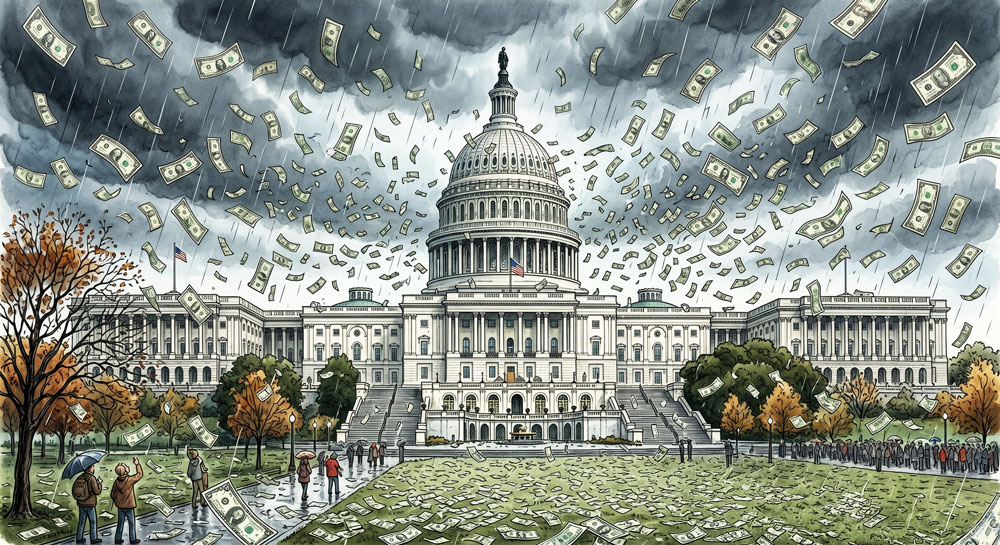
U.S. debt has crossed a symbolic line: federal debt held by the public is now larger than the country’s annual economic output. It is a milestone rarely seen since the aftermath of World War II, and it lands at a moment when high interest rates, large deficits, and political gridlock are already testing investor patience.
For markets, the issue is not that America suddenly cannot finance itself. The U.S. still has the world’s deepest bond market, the dollar’s reserve-currency advantage, and massive global demand for Treasuries. The issue is whether that privilege now comes with a higher price.
Why the WWII Comparison Matters
After World War II, U.S. debt was extremely high, but the country moved into a powerful growth cycle. Wartime spending faded, the economy expanded, and the debt burden gradually became easier to manage.
Today’s picture is different. Debt is not being driven by a temporary military surge. It reflects structural deficits, rising interest costs, entitlement pressure, and a political system struggling to agree on fiscal restraint. In plain English: this is not a one-off bill. It is a recurring charge.
The Bond Market Is Paying Attention
Treasury yields are now doing more than tracking Fed expectations. Investors are also watching supply, deficits, and the cost of rolling over debt in a higher-rate world.
That matters because Washington must constantly refinance maturing debt while funding new borrowing. When rates were near zero, high debt was easier to absorb. With rates elevated, interest expense becomes one of the fastest-growing fiscal pressures.
The result is a more cautious bond market. Investors still buy Treasuries, but they may demand higher yields to hold long-term U.S. debt.
The Forex Angle

For currency markets, the dollar remains powerful — but not untouchable.
The greenback still benefits from liquidity, reserve status, and safe-haven demand. But persistent deficits can slowly weaken the confidence premium behind the dollar, especially if investors begin questioning whether U.S. fiscal policy is on a sustainable path.
That shifts the FX conversation. The dollar is no longer just a Fed-rate trade. It is also becoming a fiscal-credibility trade.
Key pairs to watch:
EUR/USD may become more sensitive to relative fiscal stability between the U.S. and Europe.
USD/JPY could remain highly reactive to Treasury yields, but debt-driven yield spikes may add volatility rather than clean dollar strength.
GBP/USD may trade more on which economy looks less fiscally constrained.
Gold and CHF could attract defensive flows if U.S. debt worries intensify.
Why the Deficit Matters More Than the Milestone
The debt-to-GDP headline is symbolic. The deficit path is the real story.
A high debt load can be manageable if growth is strong and deficits narrow. The concern is that U.S. deficits remain large even without a recession. That means debt could keep rising even in normal economic conditions.
Markets can tolerate high debt. They are less forgiving when there is no visible plan to stabilize it.
MarketMind Insight
The U.S. dollar is not losing its crown, but the crown is getting heavier. Debt above GDP does not signal an immediate crisis; it signals that fiscal credibility is becoming a market-moving force again. For investors, the real risk is not the headline number itself, but the combination of persistent deficits, higher interest costs, and a bond market that may demand greater compensation over time. The dollar still has unmatched depth and global trust, but that trust now depends more visibly on whether Washington can show a credible path toward stabilizing the debt burden.