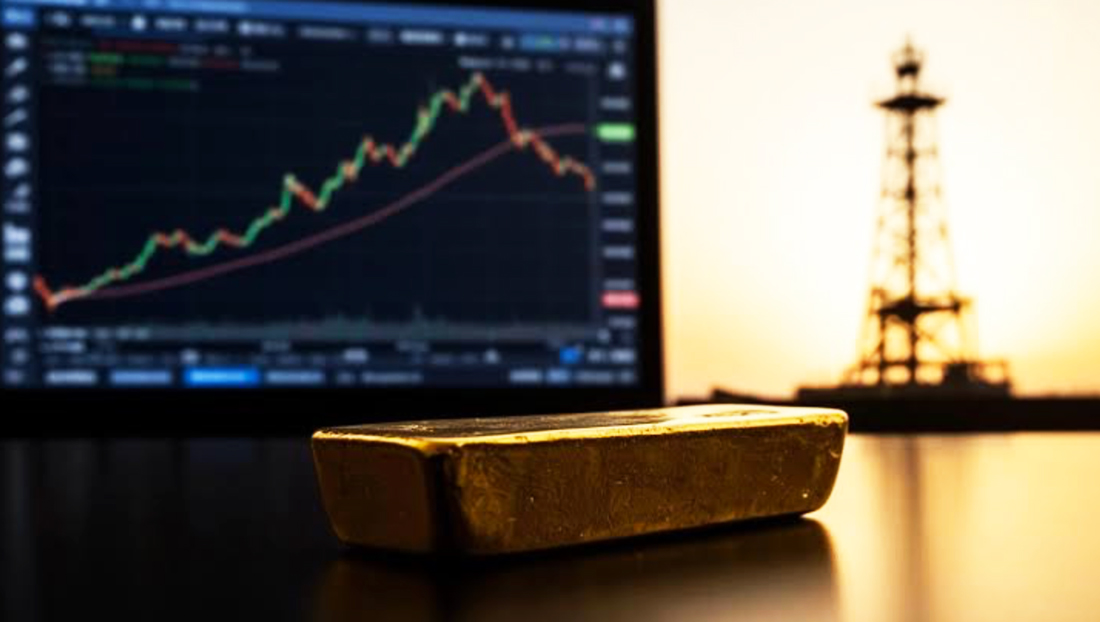
Gold is caught between two forces. A pullback in oil prices can cool fears that energy costs will keep inflation high, which may ease pressure on the Federal Reserve to tighten policy. But gold must also compete with interest-bearing assets: when Treasury yields rise and investors expect rates to stay high or move higher, holding a metal that pays no income becomes less attractive.
That tension was visible on October 19. Oil slipped from a five-month high after the United States waived sanctions and tariffs on Russia, a move that could allow more Russian fuel exports. Gold, however, edged lower as the US dollar strengthened and Treasury yields remained elevated. Investors were looking ahead to the Fed’s decision next week and fresh inflation data.
Softer Oil Offers Some Inflation Relief
Oil matters to the gold outlook because energy prices feed into the cost of transport, manufacturing and household fuel. If crude falls and stays lower, it can take some pressure off headline inflation and reduce the chance that the Fed will need to keep policy restrictive for longer.
The recent oil decline offers a potential reprieve after September’s US inflation report showed consumer prices rising 3.7% over the year, with gasoline prices up sharply during the month. But a single drop in crude does not settle the inflation question. Energy prices can reverse quickly, and the September report also showed that price pressures extended beyond fuel.
For gold, the effect is therefore indirect. Lower oil can improve the prospect of inflation easing, but the metal’s near-term direction still depends on how investors think the Fed will respond—and whether softer energy prices persist.
Yields Set the Opportunity Cost
Gold does not pay interest. Treasury securities do, so higher bond yields can make them more appealing by increasing the income investors give up when they hold gold instead. Higher yields may also reflect expectations that inflation will remain stubborn or that central banks will keep rates elevated.
On October 19, the US 10-year Treasury yield rose during the session, while the dollar strengthened. Both moves weighed on gold: a stronger dollar makes dollar-priced bullion more expensive for many overseas buyers, and higher yields increase the opportunity cost of holding it.
The bond market can move for several reasons, including changing rate expectations, inflation concerns and demand for government debt. That means lower oil prices alone may not pull yields down if investors still expect the Fed to remain hawkish.
The Fed’s Message Matters as Much as Its Decision
Investors broadly expect the Fed to hold rates at its October meeting, following a quarter-point increase in September. Attention is turning to what policymakers signal about the months ahead. If the Fed stresses that inflation remains too high, markets may price in tighter policy for longer, supporting yields and the dollar while limiting gold’s appeal.
If officials instead suggest that energy-price relief is beginning to work through the economy, expectations of future rate increases could soften. That could ease pressure on yields and support gold. But the Fed will also be watching measures of underlying inflation, which are less directly affected by swings in oil.
The next US Personal Consumption Expenditures report, the Fed’s preferred inflation gauge, will help investors assess whether price pressures are cooling broadly or whether cheaper oil is providing only temporary relief.
Gold’s Two Competing Roles
Gold is often treated as a hedge against inflation, but that relationship is not automatic. Persistent inflation can support demand for the metal as a store of value. At the same time, if inflation leads investors to expect higher interest rates, rising yields can make gold less attractive.
Gold can also draw demand when investors seek protection from geopolitical, financial or policy uncertainty. Those forces may support the metal even when yields are high. The result is a market shaped by more than one signal: oil offers clues about future inflation, bond yields reflect the return available elsewhere, and the Fed’s guidance influences both.
MarketMind Insight
Softer oil can reduce one source of inflation pressure, but it does not guarantee lower rates or stronger gold. The key question is whether cheaper energy feeds into a broader easing in inflation expectations—and whether that change is strong enough to pull Treasury yields and the dollar lower.
Until the data and the Fed’s message clarify that path, gold may remain pulled in opposite directions: supported by the prospect of cooler inflation and uncertainty, but challenged by yields that keep the opportunity cost of holding it high.