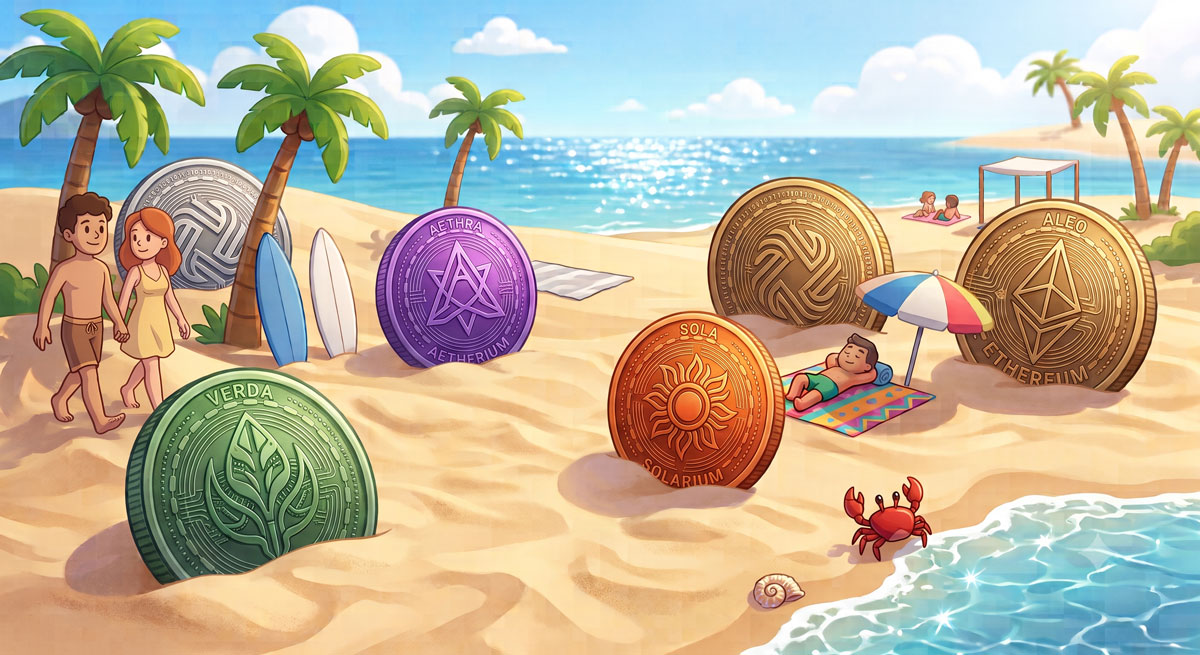
The altcoin market entered 2026 with a familiar promise: once Bitcoin cooled, capital would rotate into higher-beta tokens and trigger another broad “alt season.” But this cycle is proving less generous. Momentum alone is no longer enough to carry weaker projects, because crypto investors are becoming more selective, more institutional, and far less patient with tokens that depend mostly on hype.
The old playbook was simple. Bitcoin led, Ethereum followed, then smaller tokens exploded as traders chased risk. In 2026, that sequence has become much harder to rely on. Bitcoin dominance remains elevated, ETF flows have softened, liquidity is tighter, and speculative capital has competition from AI, equities, private markets, and tokenized finance. Altcoins can still rally, but the market is asking a tougher question now: what does this asset actually do?
The Rotation Trade Has Changed
Altcoins used to benefit from excess liquidity. When money was cheap and risk appetite was strong, traders often moved down the crypto risk curve quickly. Layer-1 tokens, gaming coins, meme coins, DeFi assets, and infrastructure names could all rise together simply because the market wanted more upside.
That blanket rotation is weaker in 2026. Investors are no longer treating every token as a lottery ticket. They are separating networks with real activity from projects with only branding, token supply, and a loud online community. That does not mean speculative rallies are gone. It means they are shorter, sharper, and less forgiving.
A token can still pump on momentum. Staying there is the hard part. The market is basically saying: nice chart, now show revenue, usage, liquidity, developer growth, institutional access, or regulatory clarity. Vibes are not dead, but they are no longer a business model.
ETF Flows Put Pressure on the Whole Crypto Complex

Bitcoin and Ethereum ETFs helped legitimize crypto, but they also changed how the market trades. Institutional investors now have cleaner ways to gain exposure to the largest assets without touching smaller tokens. That matters because capital that once flowed through exchanges into altcoins can now stop at regulated products.
When ETF inflows are strong, the broader market usually benefits from improved sentiment. When ETF flows turn negative or stall, the pressure spreads quickly. In that environment, altcoins often suffer more than Bitcoin because they carry higher volatility, thinner liquidity, and weaker institutional support.
This is one of the biggest differences between 2021 and 2026. The market is not just retail-driven anymore. It is flow-driven, macro-sensitive, and increasingly tied to regulated vehicles. That gives crypto more legitimacy, but it also raises the bar for altcoins that want serious capital.
Utility Is Becoming the Main Filter
The strongest altcoin stories in 2026 are not just about price momentum. They are about function. Investors are watching whether networks can support payments, stablecoins, decentralized finance, tokenized assets, gaming, identity, data, or real-world settlement.
That shift favours projects with measurable demand. Active users, transaction fees, developer activity, stablecoin liquidity, institutional integrations, and real applications now matter more than vague promises about “the future of Web3.”
The market is also becoming more ruthless with token economics. High emissions, weak fee capture, insider-heavy unlocks, and unclear governance are harder to ignore. In a tighter liquidity cycle, investors do not want to fund endless token dilution. They want a reason to believe value can actually accrue to the asset.
Stablecoins Are Pulling Attention Away From Speculation
Stablecoins are becoming one of the most important parts of the crypto economy. With clearer regulation and major corporate involvement, stablecoin infrastructure is moving closer to mainstream finance. That is good for crypto adoption, but it does not automatically lift every altcoin.
In fact, stablecoins may deepen the divide between useful blockchain networks and speculative token ecosystems. Chains that support real stablecoin settlement, payments, exchange liquidity, and institutional activity could benefit. Tokens with no role in that infrastructure may get left behind.
This is where altcoin investors need to be more precise. The question is not just whether crypto adoption is growing. The better question is: which tokens actually benefit when adoption grows?
Regulatory Clarity Is Now a Competitive Advantage
In earlier cycles, regulatory uncertainty was almost treated as background noise. In 2026, it is central. Tokens that can fit into clearer legal frameworks, attract institutional custody, support compliant products, or avoid major classification risks have a stronger chance of gaining durable capital.
This does not mean every successful altcoin needs an ETF. But access matters. Custody matters. Exchange listings matter. Legal clarity matters. Institutions do not chase every chart the way retail traders do. They need structure, risk controls, and a reason to believe the asset can survive scrutiny.
That gives an edge to networks with stronger compliance paths, deeper liquidity, and clearer use cases. It also makes the market less forgiving toward tokens that depend on ambiguity.
Bitcoin Dominance Is Still the Gatekeeper
Altcoin bulls often watch Bitcoin dominance because it signals whether capital is spreading out or staying concentrated. In 2026, elevated Bitcoin dominance shows that investors are still prioritizing the safest and most liquid crypto asset over smaller alternatives.
For altcoins, this creates a difficult setup. They need Bitcoin to remain stable enough to support risk appetite, but not so dominant that all liquidity stays parked in BTC. They also need Ethereum and major Layer-1 networks to regain stronger leadership, because broad altcoin rallies usually need a middle layer of confidence before capital moves further out.
Without that structure, altcoin rallies can become isolated. A few names move. A few narratives catch fire. But the market does not lift everything.
What Strong Altcoins Need in 2026
The projects best positioned for 2026 are likely to share a few traits:
- Strong network usage, not just social media attention
- Clear demand from stablecoins, DeFi, payments, gaming, or tokenized assets
- Deep exchange liquidity and institutional custody access
- Reasonable token supply structure with manageable unlocks
- Real developer activity and application growth
- A credible regulatory path
- A clear reason the token itself captures value
That last point is key. A blockchain can be useful while its token performs poorly. Investors are learning to separate product adoption from token value. That is a more mature market, but also a much tougher one.
Regional Market Relevance
For North America, the key issue is regulation and institutional access. U.S. ETF flows, stablecoin rules, custody standards, and SEC positioning will continue to shape which altcoins can attract deeper pools of capital.
For Europe, MiCA-style regulatory structure gives the region a clearer framework for digital assets, but it also favours compliant projects over purely speculative ones. That could help serious infrastructure names while squeezing weaker tokens.
For the UAE, digital assets remain part of a broader financial innovation strategy. Dubai and Abu Dhabi are likely to keep attracting blockchain firms, but the strongest opportunities will be tied to regulated infrastructure, payments, custody, and tokenization rather than pure hype cycles.
For Saudi Arabia, the relevance is more strategic. As the Kingdom continues building its technology, fintech, and capital-market ambitions, blockchain infrastructure may become more interesting than speculative tokens. Utility, compliance, and institutional-grade use cases will matter most.
MarketMind Insight
Altcoins do not need perfect market conditions in 2026, but they do need proof. Momentum can still start the move, but utility, liquidity, regulation, and value capture are what will decide whether it lasts. The easy-money altcoin cycle is fading. The next winners will need more than noise — they will need a reason to exist.