
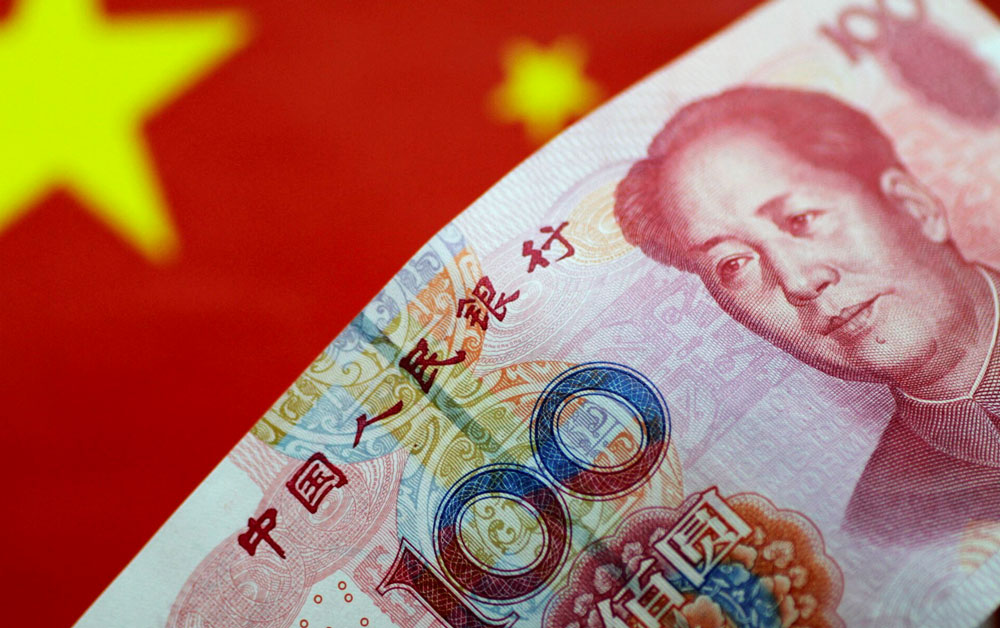
China’s next monetary easing decision may be made in Beijing, but its first visible effects could appear across Asian foreign-exchange markets. The renminbi increasingly acts as a regional reference point because China sits at the centre of Asian trade, manufacturing supply chains and commodity demand. A change in Chinese interest rates, liquidity or exchange-rate guidance can therefore alter how investors price the Korean won, New Taiwan dollar, Malaysian ringgit, Thai baht and other regional currencies.
The important question is not simply whether the People’s Bank of China eases again. It is how the central bank acts, how firmly it manages the renminbi afterward and whether monetary support is paired with measures that strengthen domestic demand. A narrow rate cut could initially weaken the yuan and pull neighbouring currencies lower. A broader package that improves confidence in Chinese consumption and investment could produce the opposite result.
That distinction matters because Asia is not one currency trade. Some currencies behave as liquid proxies for Chinese growth, some respond more strongly to US yields and the dollar, and others are constrained by managed exchange-rate systems. The next move from Beijing could still reprice the whole region, but the winners and losers would not be evenly distributed.
Why the Pressure to Ease Has Returned
China’s latest data present a mixed economy rather than a collapsing one. Gross domestic product expanded by 4.3% year over year in the second quarter of 2026, bringing first-half growth to 4.7%. July’s official manufacturing purchasing managers’ index then fell to 49.2, while its new-orders component dropped to 48.5. Both readings were below the 50 level that separates expansion from contraction.
The inflation picture is also uneven. Consumer prices rose 0.5% year over year in July and were up an average of 0.9% through the first seven months of the year. Producer prices increased 3.5% from a year earlier but declined 0.7% from June, showing that stronger annual input and industrial prices have not removed the softer month-to-month momentum.
These numbers give the PBOC a reason to provide more support without suggesting that an emergency response is required. Its second-quarter monetary policy report maintained an appropriately accommodative stance, called for timely and practical incremental measures and emphasized support for domestic demand, technology and smaller businesses. At the same time, liquidity is already ample: broad money was growing by 8.0% at the end of June, while outstanding aggregate financing to the real economy was up 7.4%.
Beijing is therefore trying to improve the effectiveness of credit, not merely increase its quantity. That makes the design of the next measure especially important for currencies.
The Move Markets Will Actually Notice
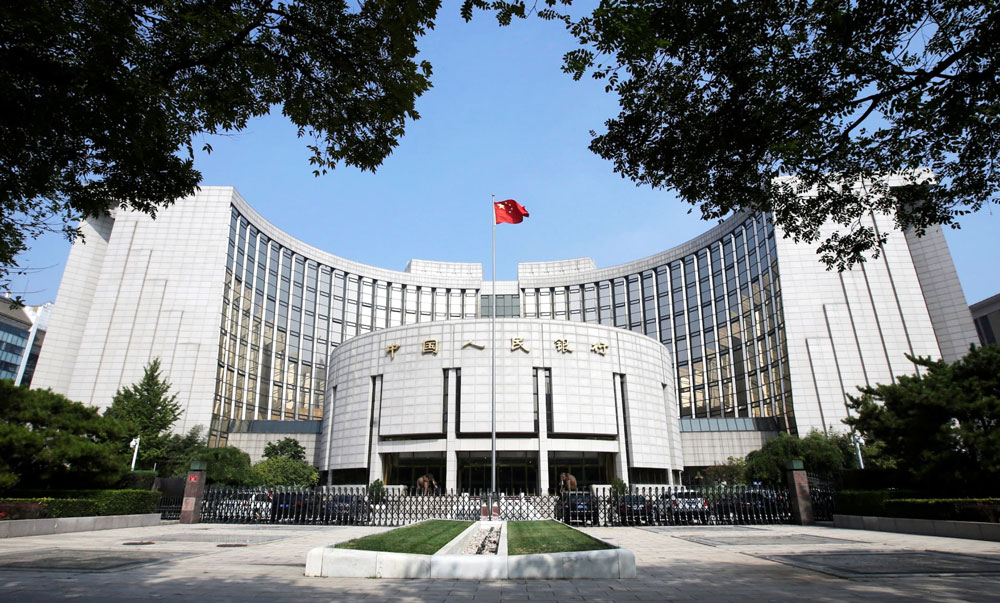
China’s one-year and five-year loan prime rates remained at 3.00% and 3.50% in the latest July setting. Both have been unchanged since May 2025, even as the PBOC expanded targeted support and refined its liquidity operations. This has created a gap between a generally accommodative policy message and the absence of a fresh reduction in the main lending benchmarks.
The next step could take several forms:
- A reserve-requirement reduction would release longer-term bank liquidity. This could support credit and sentiment while creating less direct downward pressure on the renminbi than a policy-rate cut.
- A reduction in the main policy rate would send the clearest easing signal, but it would also reduce the yield available on renminbi assets. Unless accompanied by steady exchange-rate guidance or an improved growth outlook, that could pressure the yuan and regional currencies.
- More targeted relending or sector-specific facilities would direct cheaper funding toward selected industries. This approach may help the domestic economy but would probably have a smaller immediate effect on Asian FX because it would not change the broad interest-rate structure as clearly.
- A coordinated monetary and fiscal demand package would have the largest regional impact. If investors concluded that easier money would translate into stronger Chinese imports, consumption and business activity, the growth channel could outweigh the lower-yield effect.
The PBOC’s recent expansion of short-term liquidity operations should not automatically be treated as a policy-rate signal. Routine liquidity management keeps money-market rates stable; it does not, by itself, confirm that a new easing cycle has begun. FX markets will respond much more forcefully to a change in the policy rate, reserve requirements, lending benchmarks or the central bank’s treatment of the daily yuan fixing.
The Yuan Is the Transmission Mechanism
China’s easing reaches Asian currencies through three main channels.
The first is the exchange-rate channel. A cut that weakens the renminbi can pull other Asian currencies lower as investors hedge regional exposure and exporters seek to preserve competitiveness. This effect is usually strongest among currencies connected to the same manufacturing and technology chains as China.
The second is the growth channel. If easier policy lifts Chinese demand, it can improve the outlook for Asian exporters, tourism markets and commodity suppliers. That can attract capital toward the region and support local currencies, even if Chinese interest rates decline.
The third is the portfolio channel. Lower Chinese yields can redirect some capital toward higher-yielding Asian bonds and equities. Yet that benefit is conditional: if the easing is interpreted as evidence of deeper economic weakness, investors may reduce regional risk rather than search for additional yield.
The renminbi’s starting position gives Beijing some room to manage these competing forces. The official dollar-yuan fixing stood at 6.9929 on August 14, putting the closely watched 7.0 level directly in view. China also reported a first-half current-account surplus of US$379.4 billion, while official foreign-exchange reserves stood at US$3.4188 trillion at the end of July. Those buffers do not eliminate depreciation risk, but they make a disorderly currency adjustment less likely than a controlled, two-way move.
Which Asian Currencies Are Most Exposed?
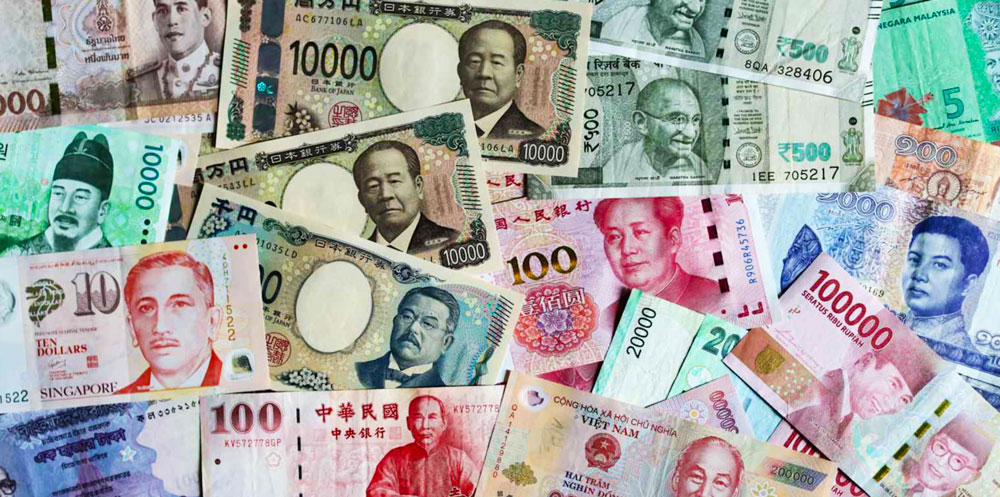
Korean won and New Taiwan dollar
These are among the clearest market proxies for Chinese and regional manufacturing activity. Both are closely connected to technology, electronics and intermediate-goods supply chains. A stable yuan combined with stronger Chinese orders would be constructive. A rate cut that pushes the yuan lower without lifting demand would instead create competitiveness concerns and likely pressure both currencies.
Malaysian ringgit and Thai baht
These currencies have meaningful exposure to Chinese trade, tourism and regional investment flows. The ringgit could benefit if easing improves demand for commodities, electronics and manufactured exports. The baht would respond more favourably if stronger Chinese activity also translates into tourism and goods demand. In both cases, domestic monetary policy and local growth conditions would still shape the final move.
Singapore dollar
Singapore is highly exposed to regional trade, but its currency is managed against a basket rather than through a conventional policy interest rate. That framework can dampen a sudden China-driven move. The Singapore dollar would still react to shifts in Asian growth and capital flows, but the Monetary Authority of Singapore’s exchange-rate settings remain the dominant policy anchor.
Indonesian rupiah, Philippine peso and Indian rupee
These currencies are affected by China, but the US dollar, global yields, commodity prices, inflation and domestic external balances often matter more. A China package that improves regional risk appetite could help them. A rate-only move that weakens the yuan while the dollar remains firm would offer much less support and could renew depreciation pressure.
Japanese yen and Hong Kong dollar
The yen sits in a different category because Bank of Japan policy, US-Japan yield differentials and safe-haven demand usually dominate its direction. China easing could weaken the yen in a risk-on response or strengthen it if the move raises concerns about regional growth. The Hong Kong dollar is tied to the US dollar under its linked exchange-rate system, so the impact would appear more through local liquidity, interest rates and asset prices than through a free adjustment in the spot currency.
Three Repricing Scenarios
1. Rate Cut, Softer Yuan
This would be the most immediately negative scenario for Asian FX. A lower Chinese policy rate, a weaker daily fixing and no convincing improvement in domestic demand would encourage investors to sell the renminbi and use the won, New Taiwan dollar and other liquid regional currencies as hedges. Commodity-sensitive currencies could also weaken if the move were interpreted as confirmation of softer Chinese growth.
2. Reserve Cut, Stable Fixing
A reserve-requirement reduction combined with firm exchange-rate management would be more balanced. It could support bank liquidity and Chinese assets without sharply widening yield disadvantages. In this scenario, the initial regional response would likely be mildly positive, led by currencies most exposed to Chinese trade and manufacturing.
3. Monetary Easing Plus Stronger Domestic Demand Support
This is the most constructive scenario for the region. If monetary support is paired with fiscal measures that lift household consumption, private investment and imports, markets could look beyond lower Chinese rates and reprice Asian currencies around a stronger growth outlook. The won, New Taiwan dollar, ringgit and baht would have the clearest route to appreciation, while commodity-linked economies outside Asia could also benefit.
What Could Limit the Move
China matters greatly, but the US dollar still dominates global funding and risk pricing. A stronger dollar or a renewed rise in US yields could overwhelm the positive effects of Chinese stimulus. Regional central banks may also respond differently depending on domestic inflation, growth and currency stability.
Investors should watch five signals rather than the headline announcement alone:
- The direction of the yuan fixing in the days after the policy move
- The gap between the onshore and offshore renminbi
- Whether Chinese credit growth reaches households and private businesses
- Changes in imports, new orders and regional export demand
- The response of US yields and the broader dollar index
The first market reaction may therefore be a trap. A rate cut can initially look negative for Asian currencies because it reduces Chinese yields. If the same policy later improves demand and stabilizes the yuan, that move can reverse. Likewise, a reserve cut may produce a brief risk rally but fade if credit demand remains weak.
Wider Global Implications
For Saudi Arabia and the UAE, whose currencies remain linked to the US dollar, the direct FX effect would be limited. The more important channel would be Chinese demand for energy, petrochemicals and industrial commodities. A credible demand-support package would be more relevant to Gulf markets than a small standalone rate cut.
European exporters would also watch whether easing lifts Chinese consumption and capital spending rather than simply expanding industrial supply. In North America, the Canadian dollar could respond through commodities, while the US dollar would remain the central counterweight to any regional Asian currency rally.
MarketMind Insight
China’s next easing move will not have a single, automatic effect on Asian currencies. A policy-rate cut that lowers yields and weakens the yuan could drag the region lower, especially the won and New Taiwan dollar. A reserve cut or coordinated demand package delivered alongside a stable fixing could instead improve growth expectations and support the currencies most closely connected to Chinese trade.
The decisive signal will not be the size of the easing measure alone. It will be whether Beijing can lower financing costs without creating a one-way depreciation trade in the renminbi. If that balance is achieved, Asian FX may be repriced around recovery. If it is not, the region could be repriced around competitive weakness instead.