Global gas security increasingly depends on two narrow points of failure. The first is the Strait of Hormuz, where disruptions have constrained flows representing nearly 20% of global liquefied natural gas supply. The second is less obvious but rapidly gaining importance: the concentrated network of terminals, pipelines and shipping channels supporting U.S. LNG exports along the Gulf Coast.
The United States has become the world’s largest LNG exporter and the leading source of replacement supply for buyers affected by reduced Middle Eastern deliveries. Yet American terminals are already operating close to their practical limits. Maintenance at one facility, a hurricane approaching Louisiana or the temporary closure of a shipping channel can now affect gas prices thousands of kilometres away.
U.S. LNG remains one of the global market’s greatest sources of flexibility. It is also becoming one of its most consequential concentrations of risk.
America Has Become the Balancing Supplier
U.S. LNG exports increased by 26% in 2025 to approximately 15.1 billion cubic feet per day. They are forecast to average around 17.4 Bcf/d in 2026 as recently opened facilities ramp up and additional liquefaction trains enter service.
This growth has changed the structure of the global gas market. Europe received a record 10.3 Bcf/d of U.S. LNG in 2025, representing 68% of total American export volumes. Asian buyers also depend on the United States to provide spot cargoes when regional demand rises or traditional suppliers experience disruptions.
The appeal of U.S. LNG is not limited to volume. Many American cargoes can be redirected between destinations, allowing traders to respond to price differences between Europe, Asia and other importing regions. That contractual flexibility has helped the United States function as the LNG market’s balancing supplier.
But contractual flexibility cannot create physical supply. Once liquefaction plants are running near capacity, higher international prices do not automatically produce more cargoes. The United States can redirect existing LNG, but its ability to deliver a sudden surge is increasingly limited by infrastructure.
Strength and Vulnerability Share the Same Coastline
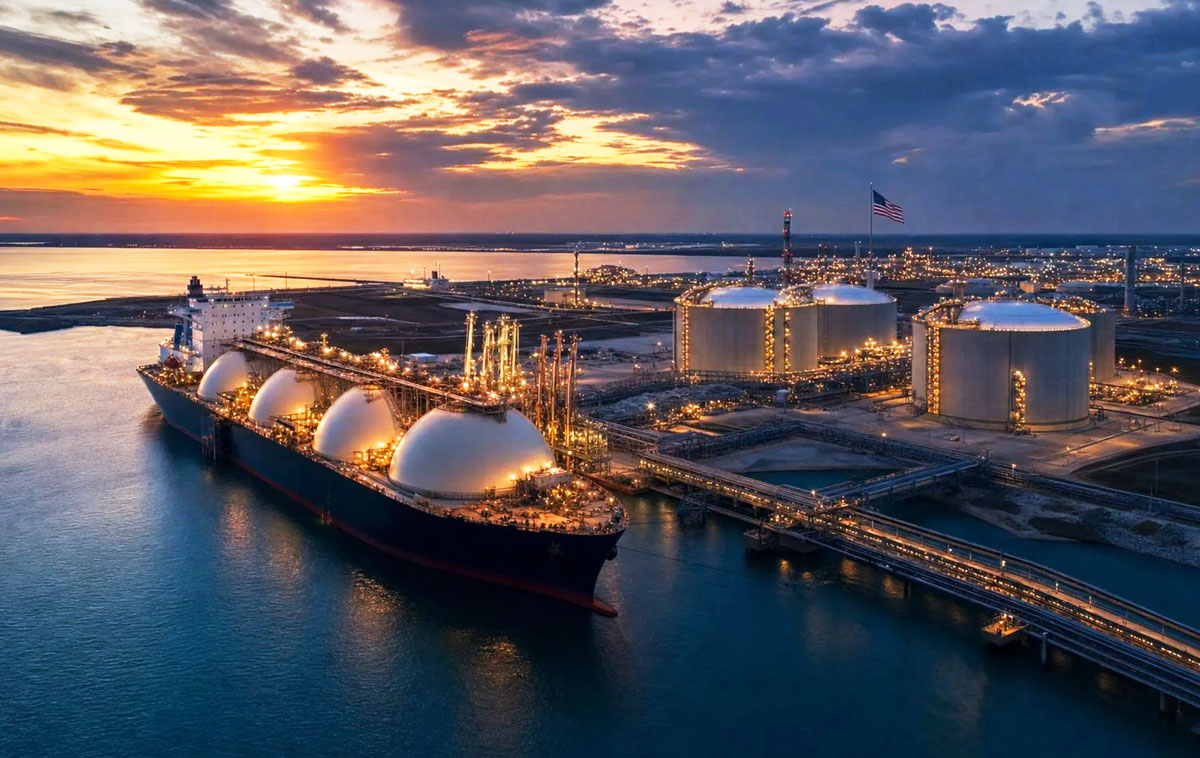
Seven of the nine operational U.S. LNG export terminals are located along the Texas and Louisiana Gulf Coast. Those facilities account for more than 90% of the country’s peak export capability, with only Cove Point in Maryland and Elba Island in Georgia providing meaningful geographic separation.
The concentration is commercially logical. The Gulf Coast offers access to prolific gas-producing regions, extensive pipeline systems, existing petrochemical infrastructure, deepwater ports and a skilled industrial workforce. These advantages helped the United States build export capacity faster than almost any previous LNG producer.
They also created correlated exposure.
A major Gulf Coast storm can affect several terminals, pipelines and waterways at once. Heavy fog can restrict vessel movements. Power interruptions, compressor problems and shipping-channel closures can delay loadings even when liquefaction equipment remains operational. Planned maintenance becomes more consequential when the remaining facilities have little unused capacity available.
The system is diversified by terminal operator, commercial contract and gas-supply source. Geographically, however, it remains heavily concentrated along a relatively narrow and weather-exposed coastline.
Freeport Shows How Quickly Capacity Can Disappear
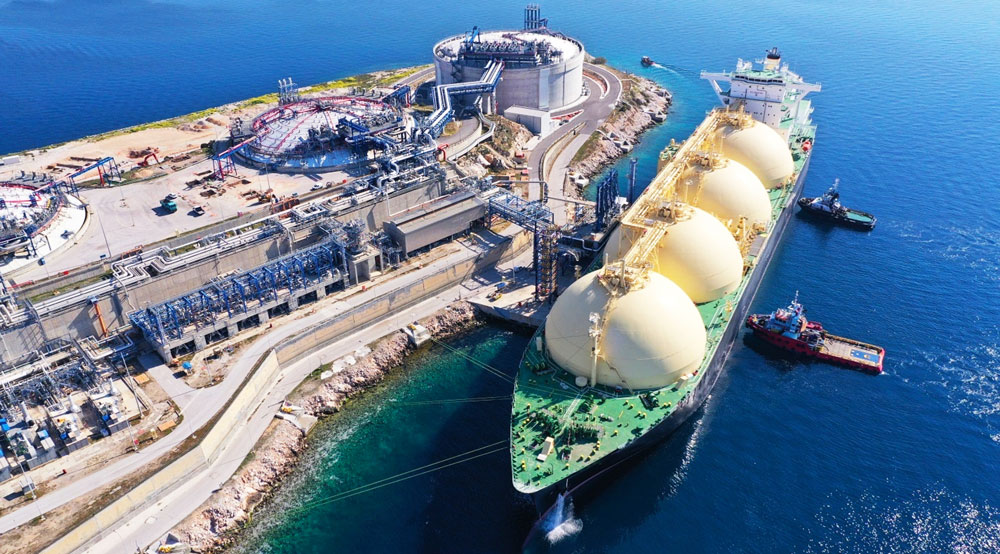
Freeport LNG has become the clearest example of how a single American facility can influence both domestic and international gas markets. Its 2022 shutdown removed roughly 2 Bcf/d of export demand for several months, leaving more gas inside the United States while reducing cargo availability abroad.
The same transmission mechanism is visible again in 2026, although under far less severe circumstances. Maintenance that began at Freeport in July temporarily affected approximately 2 Bcf/d of nominal export capacity and is expected to continue through late August.
U.S. LNG exports consequently slipped to about 10.48 million tonnes in July from 10.6 million tonnes in June, even as international gas prices strengthened. Producers could not fully exploit the wider price advantage because available liquefaction capacity, rather than gas supply, had become the limiting factor.
Third-quarter exports are now expected to average approximately 16.5 Bcf/d. The adjustment is relatively modest, but the underlying message is important: when a major terminal slows, other U.S. facilities do not necessarily possess enough spare capacity to replace the lost volume.
The Price Signal Splits at the Coast
An interruption to U.S. LNG exports can push domestic and international gas prices in opposite directions.
When liquefaction capacity falls, natural gas intended for export remains inside the United States. That additional domestic supply can weaken Henry Hub prices and increase regional storage inventories. International buyers, meanwhile, face fewer available LNG cargoes, placing upward pressure on European and Asian benchmarks.
This divergence is already visible. The Henry Hub spot price is forecast to average approximately $2.87 per million British thermal units during the third quarter. In July, Asian LNG averaged about $19.10 per MMBtu, while the main European gas benchmark averaged roughly $18.07.
Maintenance-related reductions in Gulf Coast feedgas demand also helped lift South Central U.S. inventories to 5% above their five-year average by the end of July. The United States has plenty of gas. What it temporarily lacks is enough available equipment to convert all of that gas into LNG.
For markets, this creates an unusual situation in which an American export disruption can be bearish for U.S. natural gas while simultaneously being bullish for LNG, European gas and Asian spot prices.
Maritime Flexibility Still Has Boundaries
U.S. cargoes heading to Europe can cross the Atlantic without passing through the Strait of Hormuz, giving them a major strategic advantage during Middle Eastern disruptions. This direct route is one reason American LNG has become so important to European energy security.
The journey to Asia is more complicated. Gulf Coast cargoes can use the Panama Canal when transit conditions and vessel dimensions allow. Otherwise, ships must consider substantially longer routes around the Cape of Good Hope or through the Suez Canal and Red Sea corridor, where security and insurance risks can remain elevated.
Cargoes can be redirected, but doing so consumes additional shipping time and vessel capacity. Longer voyages also increase transport costs and reduce the number of deliveries each tanker can complete over a given period. Flexibility therefore becomes less effective when multiple maritime routes are constrained simultaneously.
The first cargo from Mexico’s Pacific Coast Energia Costa Azul terminal in July introduced a small but strategically useful alternative. The facility receives U.S. pipeline gas and can serve Asian markets without requiring a Panama Canal transit. Its current nominal capacity of roughly 0.4 Bcf/d, however, remains modest compared with the scale of the Gulf Coast system.
Europe and Asia Are Competing for the Same Buffer
Europe entered August with its gas storage facilities less than 58% full, the lowest level for that point in the year since comparable records began in 2011. Inventories were approximately 12 percentage points below their year-earlier level, leaving the continent with considerable restocking still to complete before winter.
At the same time, Asian importers have been seeking alternatives to cargoes normally delivered through Hormuz. That places Europe and Asia in direct competition for flexible Atlantic Basin supply, particularly from the United States.
In previous years, higher prices could attract additional U.S. cargoes from other destinations. The current challenge is that there are fewer genuinely uncommitted cargoes available. July exports remained nearly flat despite strong international premiums, demonstrating that price signals alone cannot overcome maintenance schedules and physical capacity limits.
If European storage remains low while Asian demand strengthens, the value of every available U.S. cargo will rise. So will the market impact of any delay at an American export terminal.
More Capacity Does Not Automatically Mean More Resilience
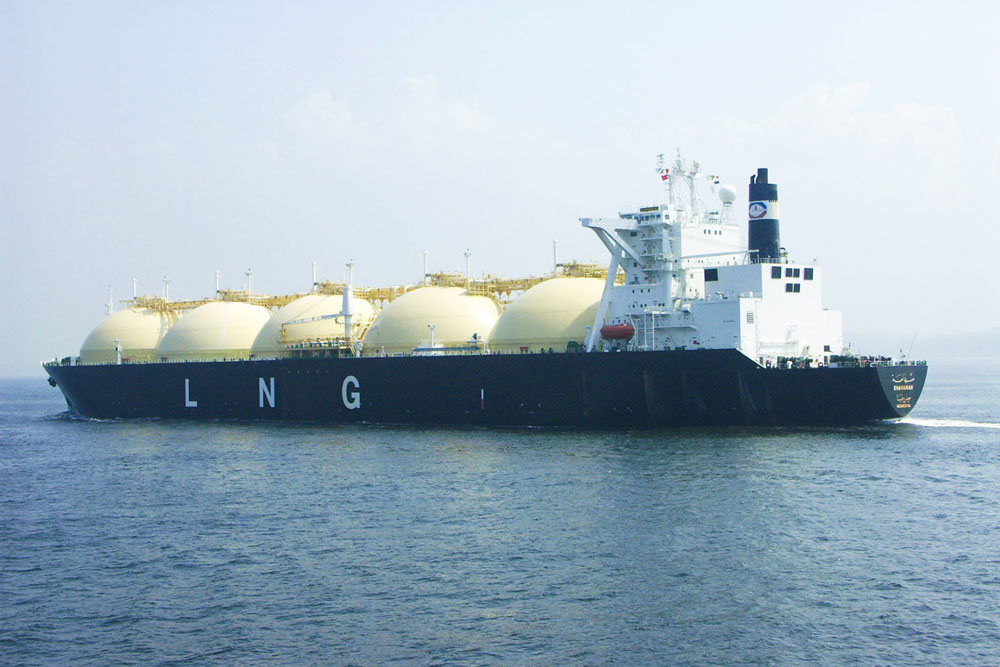
New liquefaction capacity will expand the total volume the United States can export. Golden Pass, further development at Corpus Christi and Plaquemines, and projects under construction at Port Arthur and Rio Grande are expected to reinforce the country’s position in global LNG.
Most of that capacity is still being added in Texas and Louisiana. The expansion therefore increases supply while preserving, and in some respects deepening, the industry’s geographic concentration.
This does not make the projects undesirable. The global market urgently needs additional non-Hormuz supply, and U.S. gas production can support further export growth. It does mean that resilience must be measured separately from capacity.
Additional pipelines, redundant power systems, expanded vessel berths, more flexible maintenance planning and export routes outside the Gulf Coast would improve resilience more directly than another liquefaction train connected to the same regional network.
What Gas Markets Should Watch
The most important indicators are no longer limited to headline LNG prices.
- Gulf Coast weather and port restrictions: Storm tracks, fog conditions and navigation closures can affect several facilities in quick succession.
- Terminal maintenance and feedgas deliveries: Falling pipeline flows into a terminal can reveal an operating problem before export data fully reflect it.
- U.S. cargo departures: Weekly vessel counts provide a practical measure of whether the system is responding to stronger international demand.
- European and Asian premiums over Henry Hub: Wider spreads increase the value of export capacity but cannot overcome a physical bottleneck.
- European storage and Hormuz traffic: Low inventories combined with reduced Middle Eastern supply make every U.S. outage more globally significant.
- Pacific export development: Capacity connected to U.S. gas but located on the Pacific Coast could gradually reduce dependence on Gulf Coast terminals and canal transits.
MarketMind Insight
U.S. LNG does not depend on the Strait of Hormuz, which is precisely why the world now depends so heavily on U.S. LNG. But that solution comes with a concentration problem of its own.
The global gas market is relying on a network dominated by a small number of high-utilization terminals along the Texas and Louisiana coastline. Freeport’s current maintenance has already shown that attractive prices cannot summon cargoes when liquefaction capacity is unavailable.
The next major gas shock may therefore produce a counterintuitive market response: weaker natural gas prices inside the United States, sharply higher prices abroad and a widening premium on every functioning export terminal and available LNG carrier.
America has become the world’s gas safety valve. The risk is that the valve is attached to one very crowded stretch of coastline.